 Dictionary Wiki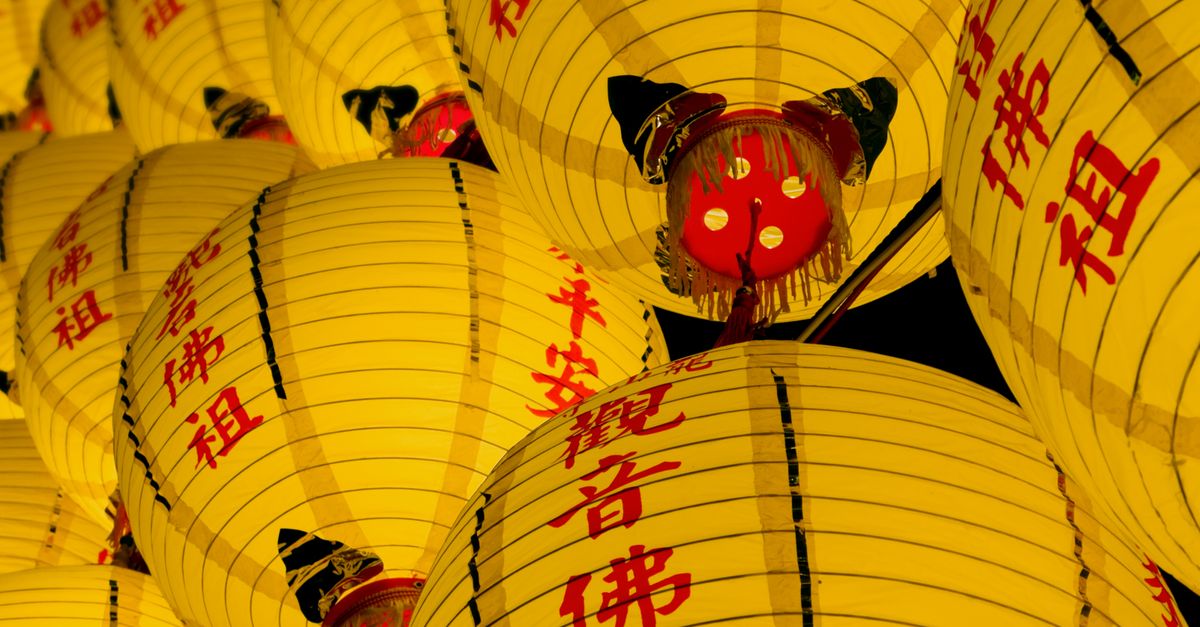
Chinese characters — hànzì (汉字) in Mandarin — form the longest-running writing system on earth, with a continuous paper trail stretching back more than three millennia. Some 1.4 billion people read and write them every day. But calling the script a "writing system" undersells what it actually is: a living archive, an art form in its own right, and a thread that ties the average reader in Shanghai or Taipei directly to the oldest recorded voices of Chinese civilization.
Where the Characters Came From
The earliest Chinese writing we have sits on oracle bones — tortoise shells and cattle shoulder blades used for divination under the late Shang dynasty, around 1200 BCE. Priests scratched questions meant for ancestors or deities into the bone, heated it until it cracked, and read the fractures as replies. The questions, and sometimes the outcomes, were recorded right there on the surface.
That oracle bone script already contained several hundred distinct signs, and many of them are clearly the ancestors of modern characters. The fact that the system was already this developed argues for an even older period of growth that we simply cannot see because the evidence has not survived.
During the Zhou dynasty (1046–256 BCE) characters shifted media. Scribes cast them onto bronze vessels as dedicatory inscriptions — commemorations of royal grants, military triumphs, and ritual occasions. This bronze script (jīnwén) has a rounder, more ornamented feel than the sharper, angular oracle bone forms.
A turning point came with Qin Shi Huang, the first emperor of a unified China, in 221 BCE. He ordered the adoption of a single standardized script — Small Seal Script (xiǎozhuàn) — replacing the patchwork of regional scripts that had drifted apart during the Warring States period. That act of standardization is why Chinese characters could serve, from then on, as a shared writing system stitching together an enormous and linguistically varied empire.
How the System Functions
At their core, Chinese characters are logographic: each one represents a morpheme — a meaningful unit of language — rather than an isolated sound. The character 木 carries the meaning "tree/wood," 水 means "water," 人 means "person." Those meanings travel across dialects and even across borders: a Japanese or Korean reader encountering 人 in a classical text will know what it refers to, even if the pronunciation in their language is completely different.
The system is not purely logographic, though. Something like 80 to 90 percent of characters are actually phono-semantic compounds — made of two parts, one hinting at the meaning and one hinting at the sound. That structure makes the system more elaborate than simple picture-writing, but it also makes it far more learnable and systematic than the stereotype of "thousands of random pictures" would suggest.
How many characters does a literate adult know? Roughly 6,000 to 8,000, depending on education and profession. Around 3,000 is the rough threshold for reading a daily newspaper without constant lookups. The total inventory that has appeared in text over the centuries exceeds 80,000, but the overwhelming majority are rare variants, archaic forms, or highly specialized technical terms that live mostly in the largest comprehensive dictionaries.
The Six Traditional Character Types
Around 100 CE the scholar Xu Shen compiled the Shuōwén Jiězì, an early dictionary that classified characters into six categories — the liùshū (六书). The scheme is not perfect, but it remains a useful lens on how the script actually behaves:
Pictographs (象形 xiàngxíng)
These are the stylized pictures people usually imagine when they first think of Chinese writing. 日 (sun) reduces to a circle with a line inside; 月 (moon) comes from a crescent shape; 山 (mountain) preserves the outline of three peaks; 水 (water) suggests flowing lines. Pictographs are a small slice of the total, but they include many of the most common and historically oldest characters.
Simple Ideographs (指事 zhǐshì)
Here the goal is to show something abstract using a conventional mark. 上 (above) and 下 (below) place a stroke above or below a horizontal reference line. The characters 一, 二, and 三 represent the numbers one through three with exactly that many horizontal strokes.
Compound Ideographs (会意 huìyì)
These combine two meaningful parts to produce a third meaning. 休 (rest) pairs 人 (person) with 木 (tree), suggesting someone leaning against a trunk. 明 (bright) joins 日 (sun) and 月 (moon). Stack 木 twice and you get 林 (a small wood); stack it three times and you get 森 (a dense forest).
Phono-Semantic Compounds (形声 xíngshēng)
By far the biggest group. These pair a semantic radical, which hints at meaning, with a phonetic component, which hints at pronunciation. 妈 (mother, mā) is the "woman" radical 女 plus the phonetic 马 (mǎ, horse). 清 (clear, qīng) is the water radical 氵 plus 青 (qīng, blue-green).
Transfer Characters and Loan Characters
The last two categories cover extensions rather than fresh creations — a character whose meaning has been stretched to cover a related concept, or one that has been borrowed to spell a different word that simply sounded the same.
Radicals: The Basic Pieces
Chinese dictionaries traditionally organize characters by radicals (bùshǒu, 部首): recurring building blocks that usually signal the semantic ballpark of a character. The standard system, fixed in the 1716 Kāngxī Zìdiǎn, recognizes 214 radicals.
A handful of familiar examples: the water radical 氵 shows up in 河 (river), 海 (sea), and 洗 (wash). The wood/tree radical 木 appears in 林 (grove), 桌 (table), and 椅 (chair). The speech radical 言 (or its compressed form 讠) sits inside 说 (speak), 话 (word), and 语 (language). The heart/mind radical 心 (or 忄) lives inside 想 (think), 情 (emotion), and 忙 (busy).
For anyone taking on the script, getting familiar with radicals early is one of the highest-payoff moves. They convert what looks like a wall of random shapes into a structured toolkit, which is why they feature prominently in most second-language learning approaches to Chinese.
Stroke Order and the Art of Writing
Every character is written using a specific stroke order — a defined sequence and direction for each line. The basic rules are: top before bottom, left before right, horizontal before vertical, outside before inside. Follow them and your handwriting stays legible, moves efficiently across the page, and looks balanced. Ignore them and the results quickly look awkward, even to a beginner.
Beyond everyday handwriting, Chinese calligraphy (shūfǎ, 书法) raises the act of writing to a fine art, with a continuous tradition of more than two thousand years. The five main styles — seal script, clerical script, regular script, running script, and grass script — run from strictly formal to almost unreadably fluid. Calligraphy stands alongside painting, poetry, and music as one of the classic Chinese arts, and it remains a demanding practice even for speakers who otherwise write with a phone.
Simplified Characters vs Traditional Ones
In the 1950s and 1960s, the People's Republic of China rolled out a large-scale character simplification program. Roughly 2,200 commonly used characters had their stroke counts trimmed, with the stated goal of boosting literacy. Familiar examples: 學 (learn) became 学; 國 (country) became 国; 書 (book) became 书.
Simplified characters are now the norm in mainland China, Singapore, and Malaysia. Traditional characters remain standard in Taiwan, Hong Kong, and Macau. The two systems are broadly mutually learnable — an educated reader can usually handle both with some adjustment — but fluency in one does not automatically mean comfort with the other, especially in handwritten material.
The Characters' Life Outside China
Chinese characters have long been adopted and reshaped by neighboring East Asian cultures. Japanese uses them as kanji alongside two native syllabaries (hiragana and katakana). Korean historically used them as hanja next to the indigenous Hangul alphabet; hanja still turn up in certain academic and legal contexts but rarely in daily writing. Vietnamese used Chinese characters (chữ Hán), along with a homegrown derivative called chữ Nôm, until a Latin-based script replaced them in the twentieth century.
The result of all this borrowing was a kind of cultural commons — sometimes called the Sinosphere — in which educated people across East Asia could correspond via shared written characters even when their spoken languages were mutually unintelligible. A Chinese, Japanese, and Korean scholar meeting in person in the past might have struggled to hold a conversation but would have been able to pass notes on paper and understand one another perfectly.
Taking On the Script as a Learner
Learning hànzì has a reputation as one of the tougher mountains in second language learning, and the first few hundred characters certainly feel like climbing. The good news is that the system is far more regular than it looks on day one. Once you internalize radicals, phonetic components, and how characters are put together, the work shifts from brute memorization toward pattern recognition.
Strategies that actually work: start with radicals and high-frequency components; group characters by shared semantic clusters; lean on spaced repetition to lock in long-term recall; write by hand regularly to cement the internal structure in muscle memory; and read graded material at a level just slightly above your comfort zone. A sense of etymology — understanding why a character looks the way it does — makes each new addition stick harder and longer.
Hànzì on Phones and Computers
Bringing Chinese into the computer age presented an interesting engineering puzzle. You cannot simply map each character to a single key on a standard keyboard. Input methods — software systems that convert keystrokes into characters — were invented to bridge the gap, and they have done the job remarkably well.
The dominant method today is Pinyin input, in which the user types the romanized pronunciation and the software offers candidate characters to pick from. Other options include shape-based systems keyed to stroke components, handwriting recognition on touchscreens, and voice input. Together these tools did more than keep Chinese viable on digital devices; they arguably made hànzì easier to produce than at any point in history.
On the back end, Unicode has encoded more than 90,000 Chinese characters across several CJK Unified Ideograph blocks, giving researchers, publishers, and ordinary users reliable digital access to both modern and historical texts.
Why the Characters Matter Culturally
It would be a mistake to treat Chinese characters as just a writing system. Each character carries accumulated layers of historical and cultural meaning, and those layers show up in the places where characters live — art, architecture, religion, philosophy, signage, weddings, funerals. Spring Festival couplets pinned to doorways, personal seals carved from soapstone, calligraphic scrolls hung in living rooms, and even tattoos in the English-speaking world all draw on the symbolic charge of hànzì.
And there is the sheer continuity of the script to reckon with. Among the world's major writing systems, Chinese characters stand almost alone in offering a reader today a direct line back to texts composed several thousand years ago. A motivated student can learn to decipher oracle bone inscriptions and read the questions that Shang priests once asked of their ancestors. Few cultural achievements anywhere on earth can match that span, and it is, in a real sense, the system's most remarkable gift.
Look Up Any Word Instantly on Dictionary Wiki
Get definitions, pronunciation, etymology, synonyms & examples for 1,200,000+ words.
Search the Dictionary