
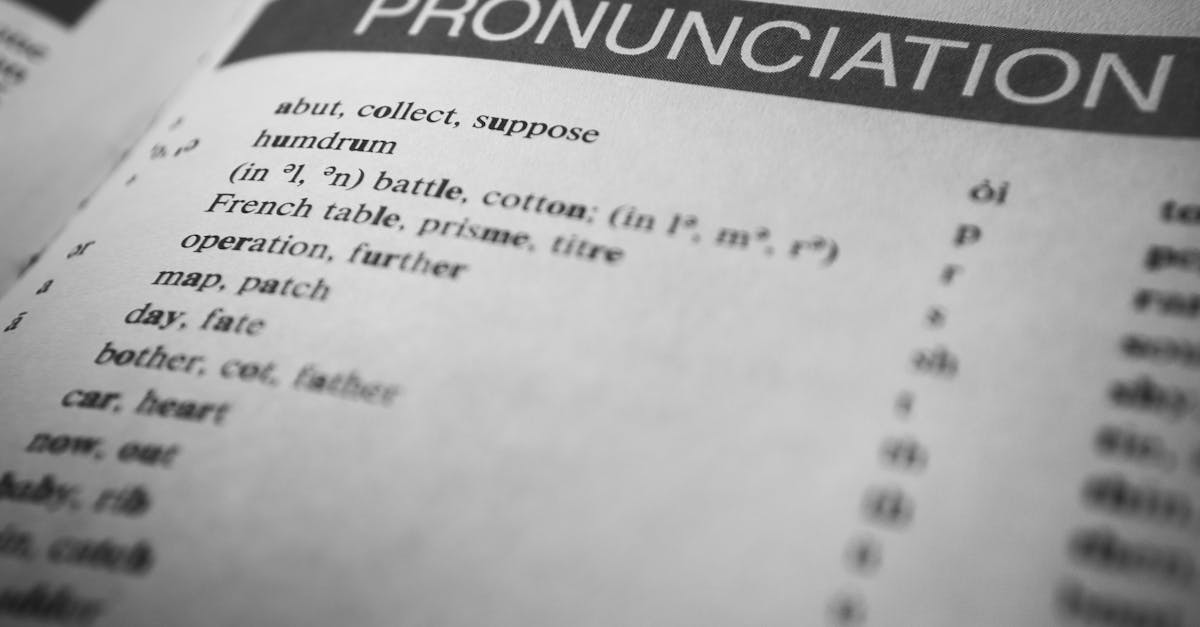
Linguistics is the scientific study of language—its structure, use, and evolution. While most people use language instinctively every day, linguists analyze the systems and patterns that make communication possible. Whether you are a student encountering linguistics for the first time, a language teacher seeking deeper understanding, or a curious reader exploring the science behind the words you speak, this glossary of linguistics terms provides clear definitions across all major subfields: phonetics, phonology, morphology, syntax, semantics, pragmatics, sociolinguistics, and historical linguistics.
Table of Contents
Core Concepts in Linguistics
These foundational terms underpin all branches of linguistic study.
- Linguistics
- The scientific study of language, encompassing its structure (grammar), sounds (phonetics/phonology), meaning (semantics), and use in context (pragmatics).
- Language
- A complex system of symbols and rules used for communication among humans. Languages are systematic, productive, and culturally transmitted.
- Grammar
- The set of structural rules governing the composition of clauses, phrases, and words in a language. In linguistics, grammar includes phonology, morphology, and syntax—not just prescriptive "correct usage."
- Descriptive vs. Prescriptive
- Descriptive linguistics describes how language is actually used. Prescriptive grammar dictates how language should be used. Linguists primarily take a descriptive approach.
- Competence vs. Performance
- Noam Chomsky's distinction: competence is a speaker's implicit knowledge of their language's rules; performance is the actual use of language in real situations, which may include errors.
- Universal Grammar
- Chomsky's theory that all human languages share a common underlying structure, and that the capacity for language is innate to the human brain.
- Sign (Linguistic)
- The fundamental unit of meaning in language, consisting of a signifier (the form—a sound, written word, or gesture) and a signified (the concept it represents), as proposed by Ferdinand de Saussure.
- Arbitrariness
- The principle that there is no inherent connection between the form of a word and its meaning. The word "dog" does not naturally resemble a dog—the connection is conventional.
- Productivity
- The capacity of language to produce and understand an infinite number of novel sentences from a finite set of rules and vocabulary.
- Displacement
- The ability of language to refer to things not present in the immediate environment—events in the past, future, or in imaginary contexts.
Phonetics and Phonology
Phonetics studies the physical properties of speech sounds; phonology studies how sounds function within a particular language system.
- Phoneme
- The smallest unit of sound that can distinguish meaning in a language. In English, /p/ and /b/ are phonemes because "pat" and "bat" have different meanings.
- Allophone
- A variant pronunciation of a phoneme that does not change meaning. The aspirated "p" in "pin" and the unaspirated "p" in "spin" are allophones of /p/ in English.
- Consonant
- A speech sound produced by partially or completely obstructing the airflow through the mouth. Consonants are classified by place of articulation, manner of articulation, and voicing.
- Vowel
- A speech sound produced with an open vocal tract and no significant obstruction. Vowels are classified by tongue height, backness, and lip rounding.
- IPA (International Phonetic Alphabet)
- A standardized system of phonetic notation representing the sounds of spoken languages, used by linguists worldwide.
- Syllable
- A unit of pronunciation consisting of a vowel sound (nucleus) with optional consonants before (onset) and after (coda).
- Prosody
- The rhythm, stress, and intonation patterns of speech that convey meaning beyond individual words—including emphasis, emotion, and sentence type.
- Minimal Pair
- Two words that differ by only one phoneme, demonstrating that the phonemes are distinct in that language. "Bit" and "pit" form a minimal pair.
Morphology
Morphology is the study of the internal structure of words—how they are formed from meaningful units.
- Morpheme
- The smallest meaningful unit of language. "Unhappiness" contains three morphemes: un- (not), happy (base), and -ness (state of).
- Free Morpheme
- A morpheme that can stand alone as a word—"book," "run," "happy."
- Bound Morpheme
- A morpheme that cannot stand alone and must be attached to another morpheme—prefixes (un-, re-) and suffixes (-ed, -ing, -ness).
- Root
- The core morpheme of a word, carrying its primary meaning. In "unhappiness," "happy" is the root.
- Affix
- A bound morpheme attached to a root or stem. Prefixes attach before the root; suffixes attach after; infixes are inserted within.
- Derivation
- The process of creating new words by adding affixes that change the word's meaning or part of speech: "happy" → "unhappy" → "unhappiness."
- Inflection
- Modifications to a word that express grammatical information (tense, number, case) without changing the word's core meaning or part of speech: "walk" → "walks," "walked," "walking."
- Compound
- A word formed by combining two or more free morphemes: "blackboard," "sunflower," "toothbrush."
Syntax
Syntax is the study of how words combine to form phrases, clauses, and sentences.
- Phrase
- A group of words functioning as a single unit within a sentence—noun phrase (NP), verb phrase (VP), prepositional phrase (PP).
- Clause
- A group of words containing a subject and a predicate. Independent clauses can stand alone; dependent clauses cannot.
- Constituent
- A word or group of words that functions as a single unit within a hierarchical sentence structure.
- Word Order
- The arrangement of words in a sentence. English follows Subject-Verb-Object (SVO) order; Japanese follows SOV; Arabic follows VSO.
- Phrase Structure Rules
- Formal rules describing how phrases and sentences are generated in a language, often represented as tree diagrams.
- Transformation
- In generative grammar, a rule that converts one sentence structure into another—such as transforming an active sentence into a passive one.
- Recursion
- The property of language that allows structures to be embedded within structures of the same type, enabling infinitely complex sentences: "The cat that the dog that the boy owned chased ran away."
- Ambiguity
- When a sentence has more than one possible interpretation. Structural ambiguity: "I saw the man with the telescope" (who has the telescope?).
Semantics
Semantics is the study of meaning in language.
- Denotation
- The literal, dictionary meaning of a word. The denotation of "home" is a place where one lives.
- Connotation
- The emotional or cultural associations a word carries beyond its literal meaning. "Home" connotes warmth, comfort, and belonging.
- Synonym
- A word with a meaning similar or identical to another word. "Happy" and "joyful" are synonyms.
- Antonym
- A word with an opposite meaning. "Hot" and "cold" are antonyms.
- Homonym
- A word that shares the same spelling or pronunciation as another word but has a different meaning. "Bank" (financial institution) and "bank" (riverbank).
- Polysemy
- When a single word has multiple related meanings. "Head" can mean the top of the body, the leader of an organization, or the top of a nail.
- Semantic Field
- A group of words related in meaning, belonging to a particular domain. "Chair," "table," "sofa," and "desk" belong to the semantic field of furniture.
- Entailment
- A relationship where the truth of one statement necessarily follows from another. "She is a mother" entails "She is a parent."
Pragmatics
Pragmatics studies how context influences the interpretation of meaning.
- Context
- The circumstances surrounding a communication event—physical setting, social relationship, shared knowledge—that affect interpretation.
- Speech Act
- An utterance that performs an action—requesting, promising, apologizing, commanding. J.L. Austin and John Searle developed speech act theory.
- Implicature
- What a speaker implies beyond the literal meaning of their words. If asked "Can you pass the salt?" the implicature is a request, not a question about ability.
- Deixis
- Words whose meaning depends on context—personal ("I," "you"), spatial ("here," "there"), and temporal ("now," "then") expressions.
- Presupposition
- An assumption embedded in a statement that is taken for granted. "Have you stopped smoking?" presupposes that you were smoking.
- Cooperative Principle
- Grice's theory that speakers generally cooperate in conversation by being informative, truthful, relevant, and clear (the four maxims of conversation).
- Politeness Theory
- Brown and Levinson's framework explaining how speakers use language strategies to maintain social harmony and manage "face" (social self-image).
Sociolinguistics
Sociolinguistics examines the relationship between language and society.
- Dialect
- A regional or social variety of a language distinguished by pronunciation, grammar, and vocabulary. Every speaker speaks a dialect.
- Accent
- The phonological features of a particular dialect—how words are pronounced. An accent is one component of a dialect.
- Sociolect
- A variety of language associated with a particular social group, class, or subculture.
- Register
- A variety of language appropriate to a particular situation, audience, or purpose—formal, informal, academic, colloquial.
- Code-Switching
- Alternating between two or more languages or language varieties within a single conversation or even a single sentence.
- Lingua Franca
- A language used as a common means of communication between speakers of different native languages. English serves as a global lingua franca today.
- Language Death
- The process by which a language ceases to be spoken, typically when its last native speakers die without passing it to a new generation.
- Pidgin
- A simplified contact language that develops between groups with no common language, used for limited purposes like trade.
- Creole
- A stable, fully developed language that evolved from a pidgin and became the native language of a community.
Historical Linguistics
- Historical Linguistics
- The study of how languages change over time, including sound changes, grammatical shifts, and vocabulary evolution.
- Etymology
- The study of the origin and history of words—how their forms and meanings have changed over time. Learn more about etymology and its methods.
- Language Family
- A group of languages descended from a common ancestor. The Indo-European family includes English, Spanish, Hindi, Russian, and many others.
- Proto-Language
- A reconstructed ancestral language from which a group of related languages descended. Proto-Indo-European is the reconstructed ancestor of the Indo-European family.
- Sound Change
- Systematic changes in pronunciation that occur over time in a language, such as the Great Vowel Shift in English (roughly 1400–1700).
- Cognate
- Words in different languages that share a common ancestor. English "mother," German Mutter, and Latin mater are cognates.
- Borrowing (Loanword)
- A word adopted from one language into another. English has borrowed extensively from French, Latin, Greek, and many other languages.
- Grammaticalization
- The process by which content words (nouns, verbs) evolve into grammatical function words or affixes over time.
Applied Linguistics
- Applied Linguistics
- The use of linguistic theory and methods to address real-world language problems, including language teaching, translation, forensic linguistics, and language policy.
- Second Language Acquisition (SLA)
- The study of how people learn a second (or additional) language after their first language is established.
- Bilingualism / Multilingualism
- The ability to use two (bilingual) or more (multilingual) languages. More than half of the world's population is at least bilingual.
- Corpus Linguistics
- The study of language based on large, systematic collections of texts (corpora), using computational tools to analyze patterns in real-world language use.
- Computational Linguistics
- An interdisciplinary field combining linguistics and computer science, focused on enabling computers to process and understand human language (natural language processing).
Tips for Learning Linguistics Terms
- Start with the big picture. Understand the major subfields (phonetics, morphology, syntax, semantics, pragmatics) before diving into details.
- Study word roots. "Linguistics" from Latin lingua (tongue/language); "phoneme" from Greek phōnē (sound); "morpheme" from Greek morphē (form).
- Apply terms to your own language. Identify phonemes, morphemes, and syntactic patterns in sentences you speak and hear daily.
- Read introductory textbooks. Linguistics textbooks provide systematic explanations with abundant examples.
- Build your English vocabulary broadly. Linguistics connects to grammar, etymology, and cognitive science.
Linguistics vocabulary is the meta-language of language—the terms we use to analyze the very tool we use to think and communicate. By learning these terms, you gain insight into one of humanity's most remarkable abilities. Explore more at dictionary.wiki.