 Dictionary Wiki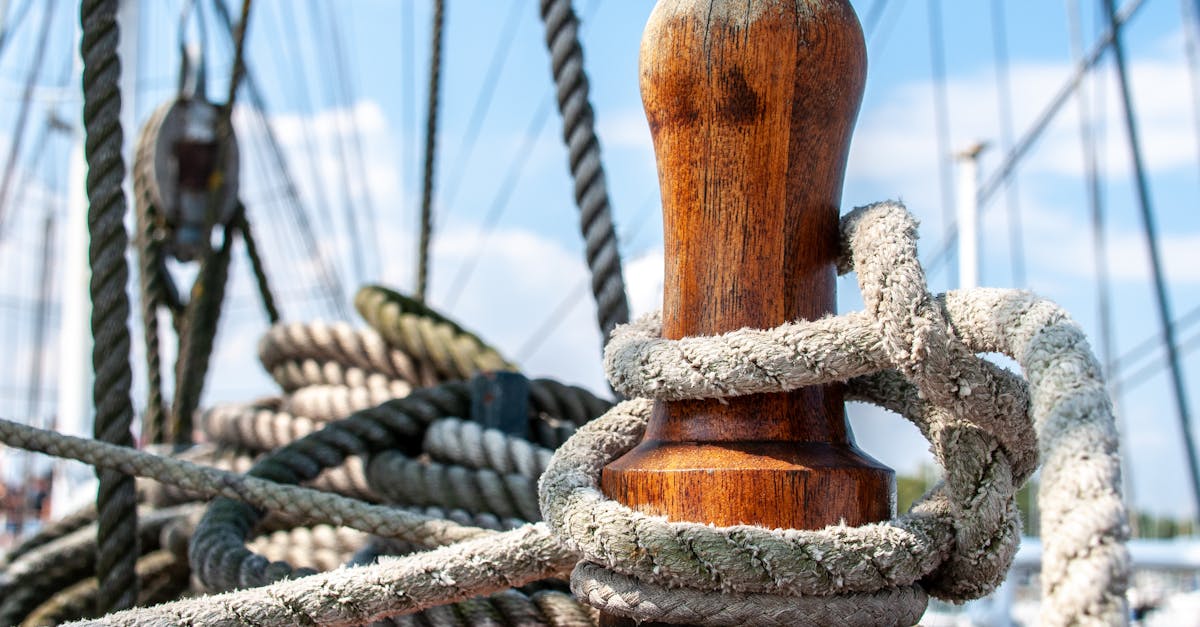
Contents at a Glance
- How the Sea Shaped English
- Everyday Idioms with Shipboard Roots
- Words for Finding the Way
- Ship Parts Used as Everyday Images
- Verbs and Phrases from Sailing Life
- Sea Weather in General English
- Ranks, Records, and Organization at Sea
- Words from Pirates and Privateers
- Seafaring Borrowings from Other Languages
- Business and Tech Uses of Nautical Language
- Final Thoughts
English is full of words that once belonged to sailors, shipwrights, merchants, and naval crews. Some still sound salty and old-fashioned; others are so ordinary that their sea origins are easy to miss. When someone is "on board" with a plan, "taken aback" by news, or trying to "stay on an even keel," they are using language that grew out of working ships, rough weather, trade routes, and naval command. This article traces those everyday expressions back to maritime life and shows how etymology can reveal a hidden voyage inside familiar English words.
How the Sea Shaped English
The bond between English and the sea is older than the language in its modern form. The Angles, Saxons, and Jutes who carried Old English to Britain crossed the North Sea by boat. Later, Viking settlers and raiders brought Norse speech, including seafaring vocabulary, to English coasts. By the time of Elizabeth I, England was becoming a serious naval force, and the English language had absorbed a large supply of words from ships, navigation, and ocean trade.
From the seventeenth to the nineteenth century, Britain’s control of major trade routes spread this vocabulary even further. Sailors and merchants met unfamiliar peoples, technologies, climates, and hazards. They needed precise names for what they saw and did. When crews came home, their professional language did not stay on the docks; it moved into taverns, offices, households, and eventually ordinary speech.
Everyday Idioms with Shipboard Roots
Many familiar English idioms began as practical sailing language, though most speakers no longer hear the maritime connection:
- "By and large" — Sailors used this phrase for a vessel that could sail both "by" the wind, or close to it, and "large," with the wind more behind it. It developed the general sense of "overall" or "for the most part."
- "Know the ropes" — Handling a sailing vessel required understanding which rope did what. A person who has mastered a job or situation now "knows the ropes."
- "Batten down the hatches" — Crews secured hatch covers with wooden battens before heavy weather to keep seawater out. The phrase now means to get ready for a difficult period.
- "Above board" — What happened on the deck, literally above the boards, was visible rather than concealed below. In modern use, something above board is open, legal, and honest.
- "In the doldrums" — The doldrums are equatorial regions where weak winds could leave sailing ships stuck for long stretches. The phrase now describes low spirits, inactivity, or lack of progress.
- "Three sheets to the wind" — A sheet is a rope used to control a sail. If several sheets came loose, the ship lurched and floundered, giving us an image for drunkenness.
- "All hands on deck" — This was a call for the whole crew to report to the deck, often because the ship needed urgent attention. Today it means everyone must pitch in.
- "Give a wide berth" — A berth is the safe space around a vessel at anchor or alongside. To give someone or something a wide berth is to keep well away.
- "Cut and run" — A ship in danger might cut the anchor cable and run off with the wind rather than lose time weighing anchor. The idiom means to escape quickly.
- "Taken aback" — A sailing ship was taken aback when a sudden wind shift pushed the sails from the wrong side and checked its movement. Now the phrase means startled or shocked.
Words for Finding the Way
Several common words about position, direction, and movement began with navigation and life aboard ship:
- Navigate — From Latin navigare, meaning "to sail," the word broadened from steering a course at sea to finding a route through a city, a problem, or a website.
- Landmark — At first, this meant a visible feature on land used by sailors to recognize position. It now means any important marker, reference point, or notable achievement.
- Starboard — The right-hand side of a vessel, from Old English stēorbord, the "steering side," because early boats were steered with an oar on that side.
- Course — A ship’s intended direction of travel. The meaning spread to any planned route, sequence, or program of study.
- Leeway — Wind can push a ship sideways from its intended line. In wider use, leeway means freedom, extra room, or flexibility.
- Port — The left side of a ship, named because vessels commonly tied up to port on that side to protect the steering oar.
- Bearing — A bearing is the direction of something in relation to a vessel. To "get your bearings" is to work out where you are and how things are oriented.
Ship Parts Used as Everyday Images
- Helm — The steering gear of a ship. A person "at the helm" is directing an organization, project, or group.
- Anchor — The weight that keeps a vessel from drifting. Figuratively, an anchor is something that steadies, grounds, or secures.
- Flagship — The vessel from which an admiral commanded a fleet and flew his flag. Now it refers to a leading store, product, service, or institution.
- Deck — The floor surface of a ship. To "clear the decks" is to remove clutter or obstacles so action can begin.
- Mast — The upright spar that carries sails. To "nail one’s colors to the mast" is to announce a position firmly and publicly.
- On board — Originally, this meant being on the boards of the ship itself. Now it can mean joining a team, accepting an idea, or agreeing to a plan.
- Keel — The main structural spine of a ship. If something is "on an even keel," it is steady, balanced, and under control.
Verbs and Phrases from Sailing Life
- "Jettison" — A crew might throw cargo overboard to lighten a ship in danger. The word now means to get rid of anything considered unnecessary or harmful.
- "Weather the storm" — A ship that survived heavy weather had weathered the storm. The phrase now applies to enduring financial trouble, scandal, illness, or any crisis.
- "Fathom" — A fathom is a depth measure of six feet. To say "I can’t fathom it" means you cannot understand it or reach the bottom of the matter.
- "Capsize" — A boat capsizes when it turns over. Figuratively, a scheme, project, or business can capsize when it collapses badly.
- "Tide over" — When wind failed, the tide could still move a ship along. To tide someone over is to provide enough help to get through a shortage or hard spell.
- "Marooned" — A person marooned was left on a deserted shore. The word now covers being stranded almost anywhere.
- "Sail through" — A vessel moving through easy water gives us the image of passing a test, task, or obstacle with little effort.
- "Forge ahead" — This suggests pressing forward through difficult water. In general speech, it means to keep making progress despite resistance.
Sea Weather in General English
Sailors paid close attention to weather conditions, and their terms for wind, waves, and seasons helped shape broader English usage:
- Squall — A sudden fierce wind at sea. It can also describe an abrupt disturbance, outburst, or noisy commotion.
- Monsoon — From Arabic mawsim, meaning "season," carried into English by sailors working in the Indian Ocean.
- Calm — Not only a sea word, but calm water mattered enormously to sailors, especially when wind-powered ships could not move.
- Typhoon — From Chinese tai fung, meaning "great wind," a word that reached English through sailors and trade routes.
- Tsunami — Borrowed from Japanese, from tsu "harbor" and nami "wave," and brought into English through maritime contact.
Ranks, Records, and Organization at Sea
Navies and merchant ships needed clear chains of command, careful records, and organized crews. Their vocabulary moved easily into civilian life:
- Fleet — A collection of ships, later extended to groups of vehicles, aircraft, or other assets managed together.
- Log — Originally a ship’s record of speed and progress, connected with measuring speed by trailing a log on a rope. Today a log is any orderly record.
- Admiral — From Arabic amir al-bahr, "commander of the sea," one of several English words shaped by maritime contact with the Arab world.
- Shipshape — Neat, orderly, and well maintained, like a properly run ship.
- Crew — The people working together on a ship. The word now covers almost any team that works as a unit.
- Captain — From Latin capitaneus, meaning "chief," and firmly established as a rank through naval use.
Words from Pirates and Privateers
The so-called golden age of piracy, roughly 1650 to 1730, left English with some especially vivid words:
- Loot — From Hindi lūṭ, adopted by English sailors and soldiers in India.
- Jolly Roger — The pirate flag, possibly connected with French joli rouge, meaning "pretty red."
- Buccaneer — From French boucanier. The term first referred to Caribbean hunters who smoked meat on a boucan, or grill, before some turned to piracy.
- Swashbuckler — First a loud braggart who struck his buckler, or shield, with a sword. It later came to mean a bold, dashing adventurer.
- Plunder — To seize goods by force, from Dutch plunderen, entering English through maritime conflict.
Seafaring Borrowings from Other Languages
Ocean travel placed English speakers in contact with ports, crews, and traders across the world. As with many languages borrowed through trade, English nautical vocabulary reflects that exchange:
- From Italian: frigate, gondola, arsenal
- From Arabic: admiral, monsoon, cable
- From Dutch: yacht, skipper, deck, dock, cruise, freight, smuggle
- From Malay: junk (a type of boat), sampan
- From Spanish/Portuguese: cargo, embargo, hurricane, breeze, galleon
- From Hindi: dinghy, catamaran (via Tamil)
Business and Tech Uses of Nautical Language
Nautical language remains useful in business, media, and technology, where ships and voyages provide clear metaphors for movement, control, and leadership:
- Launch — Once the act of putting a ship into the water; now the start of a product, service, campaign, or project.
- Onboarding — The process of bringing new employees "on board" with a company, its tools, and its culture.
- Anchor — In broadcasting, a news anchor is the person who steadies or centers a program.
- Navigate — Commonly used for moving through websites, apps, menus, and other digital spaces.
- Flagship product — A company’s most visible, important, or representative offering.
- Dashboard — Originally a board at the front of a carriage or ship; now the main screen for controls, data, or status.
- Pipeline — Not purely nautical, but the idea of moving goods through channels echoes the language of maritime trade.
Final Thoughts
Much of English’s maritime past is hiding in plain sight. We may no longer think of sails, ropes, hatches, or anchor cables when we use these expressions, but the old images still do useful work. Nautical words give English compact ways to talk about shock, preparation, leadership, danger, progress, and stability. From sailing ships to software dashboards, the vocabulary of the sea has kept moving, carrying older meanings into new settings without losing its force.
Look Up Any Word Instantly on Dictionary Wiki
Get definitions, pronunciation, etymology, synonyms & examples for 1,200,000+ words.
Search the Dictionary