
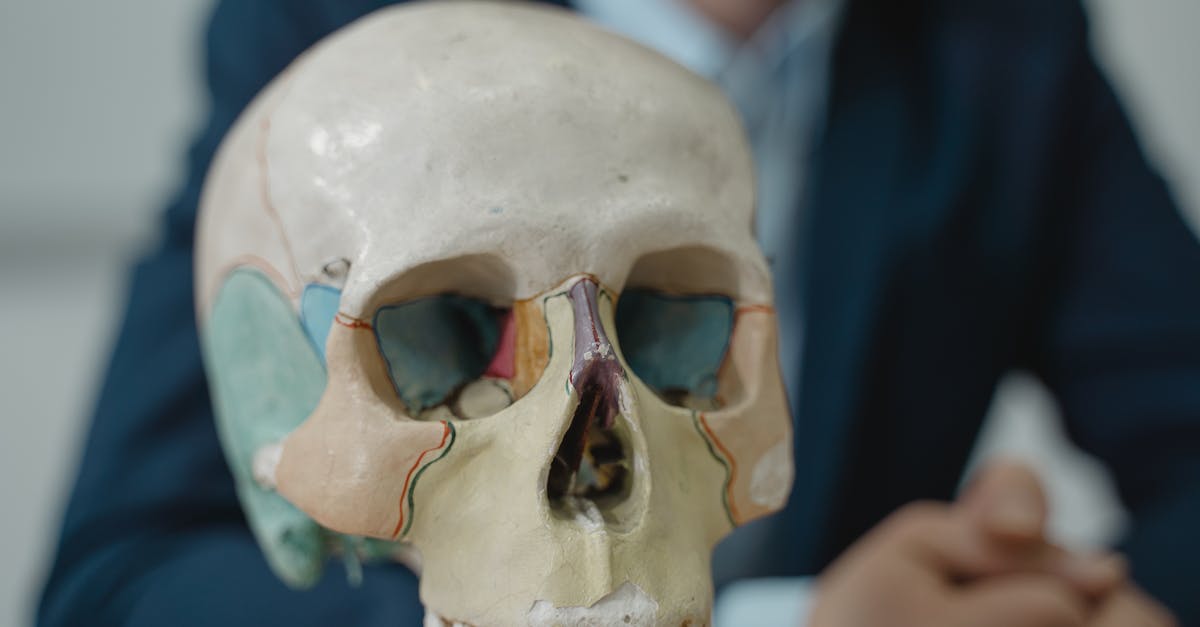
The human body is described using a precise vocabulary of Latin and Greek terms that has been refined over centuries of medical practice and anatomical study. These terms may seem unnecessarily complex when everyday English words exist for most body parts, but anatomical terminology serves a critical purpose: it eliminates ambiguity. When a surgeon says "lateral," there is no question about which direction they mean. When a radiologist identifies a fracture of the "distal phalanx," every healthcare professional in the world knows exactly which bone is broken. This guide introduces the fundamental anatomical vocabulary that underlies all medical communication about the human body.
The Anatomical Position
All anatomical descriptions assume the body is in the "anatomical position": standing upright, facing the observer, arms at the sides with palms facing forward, feet together and flat on the floor. This standardized position eliminates confusion about terms like "left" and "right" (always referring to the patient's left and right, not the observer's) and ensures that directional terms are consistent regardless of how the body is actually positioned.
Without this convention, describing the location of a tumor, the insertion point of a muscle, or the path of a nerve would be hopelessly ambiguous. The anatomical position is the universal reference frame for all descriptions of the human body.
Directional Terms
| Term | Meaning | Opposite | Example |
|---|---|---|---|
| Superior | Toward the head / upper | Inferior | The heart is superior to the stomach |
| Inferior | Away from the head / lower | Superior | The stomach is inferior to the heart |
| Anterior (ventral) | Toward the front | Posterior | The sternum is anterior to the spine |
| Posterior (dorsal) | Toward the back | Anterior | The spine is posterior to the sternum |
| Medial | Toward the midline | Lateral | The heart is medial to the lungs |
| Lateral | Away from the midline | Medial | The ears are lateral to the nose |
| Proximal | Closer to the trunk | Distal | The elbow is proximal to the wrist |
| Distal | Farther from the trunk | Proximal | The fingers are distal to the elbow |
| Superficial | Closer to the surface | Deep | Skin is superficial to muscle |
| Deep | Farther from the surface | Superficial | Bones are deep to muscles |
Body Planes and Sections
Sagittal plane — divides the body into left and right portions (L. sagitta = arrow). A midsagittal plane divides into equal halves.
Frontal (coronal) plane — divides the body into front and back portions (L. corona = crown)
Transverse (horizontal) plane — divides the body into upper and lower portions
Oblique plane — cuts at an angle between the other planes
Frontal (coronal) plane — divides the body into front and back portions (L. corona = crown)
Transverse (horizontal) plane — divides the body into upper and lower portions
Oblique plane — cuts at an angle between the other planes
These planes are essential for medical imaging. CT scans and MRI images are typically taken in one of these standard planes, allowing healthcare providers to describe the exact location and extent of anatomical structures or pathology.
The Skeletal System
Major Bones
| Common Name | Anatomical Name | Etymology |
|---|---|---|
| Skull | Cranium | Gk. kranion (skull) |
| Jawbone | Mandible | L. mandibula (jaw) |
| Collarbone | Clavicle | L. clavicula (little key) |
| Shoulder blade | Scapula | L. scapula (shoulder blade) |
| Breastbone | Sternum | Gk. sternon (chest) |
| Upper arm bone | Humerus | L. humerus (shoulder) |
| Forearm bones | Radius and Ulna | L. radius (ray), ulna (elbow) |
| Thigh bone | Femur | L. femur (thigh) |
| Shinbone | Tibia | L. tibia (flute/shinbone) |
| Kneecap | Patella | L. patella (small dish) |
| Finger/toe bones | Phalanges | Gk. phalanx (line of soldiers) |
| Backbone | Vertebral column | L. vertebra (joint, turning) |
The Muscular System
Muscle names encode information about their shape, location, size, function, or number of origins.
Named by shape: Deltoid (delta-shaped), Trapezius (trapezoid), Rhomboid
Named by location: Tibialis (near the tibia), Intercostal (between ribs), Temporalis (at the temple)
Named by size: Gluteus maximus (largest buttock muscle), Gluteus minimus (smallest)
Named by function: Flexor (bends a joint), Extensor (straightens), Adductor (moves toward midline), Abductor (moves away from midline)
Named by number of heads: Biceps (two heads), Triceps (three heads), Quadriceps (four heads)
Named by location: Tibialis (near the tibia), Intercostal (between ribs), Temporalis (at the temple)
Named by size: Gluteus maximus (largest buttock muscle), Gluteus minimus (smallest)
Named by function: Flexor (bends a joint), Extensor (straightens), Adductor (moves toward midline), Abductor (moves away from midline)
Named by number of heads: Biceps (two heads), Triceps (three heads), Quadriceps (four heads)
Organ Systems
| System | Latin/Greek Root | Key Organs |
|---|---|---|
| Cardiovascular | kardia (heart) + vasculum (vessel) | Heart, arteries, veins, capillaries |
| Respiratory | respirare (to breathe) | Lungs, trachea, bronchi, diaphragm |
| Digestive (GI) | digerere (to dissolve) | Esophagus, stomach, intestines, liver |
| Nervous | nervus (sinew) | Brain, spinal cord, nerves |
| Endocrine | endo (within) + krinein (to separate) | Thyroid, pituitary, adrenal glands |
| Urinary/Renal | ren (kidney) + urina | Kidneys, ureters, bladder, urethra |
| Integumentary | integumentum (covering) | Skin, hair, nails |
| Lymphatic/Immune | lympha (water) | Lymph nodes, spleen, thymus |
Body Region Names
Cranial — skull region (Gk. kranion)
Cervical — neck region (L. cervix = neck)
Thoracic — chest region (Gk. thorax = breastplate)
Abdominal — belly region (L. abdomen)
Lumbar — lower back (L. lumbus = loin)
Pelvic — hip region (L. pelvis = basin)
Brachial — arm region (L. brachium = arm)
Femoral — thigh region (L. femur = thigh)
Popliteal — behind the knee (L. poples = ham of the knee)
Plantar — sole of the foot (L. planta = sole)
Palmar — palm of the hand (L. palma = palm)
Cervical — neck region (L. cervix = neck)
Thoracic — chest region (Gk. thorax = breastplate)
Abdominal — belly region (L. abdomen)
Lumbar — lower back (L. lumbus = loin)
Pelvic — hip region (L. pelvis = basin)
Brachial — arm region (L. brachium = arm)
Femoral — thigh region (L. femur = thigh)
Popliteal — behind the knee (L. poples = ham of the knee)
Plantar — sole of the foot (L. planta = sole)
Palmar — palm of the hand (L. palma = palm)
Word-Building in Anatomy
Anatomical terms are systematically constructed from roots, prefixes, and suffixes. Learning these building blocks lets you decode virtually any anatomical term you encounter.
| Component | Meaning | Example |
|---|---|---|
| cardi/o | heart | cardiology, pericardium |
| oste/o | bone | osteoporosis, osteoblast |
| my/o | muscle | myocardium, myalgia |
| arthr/o | joint | arthritis, arthroscopy |
| neur/o | nerve | neurology, neuropathy |
| derm/o | skin | dermatology, epidermis |
| hem/o, hemat/o | blood | hemorrhage, hematoma |
| pneum/o | lung/air | pneumonia, pneumothorax |
| enter/o | intestine | enteritis, gastroenterology |
| cephal/o | head | cephalic, encephalitis |
Anatomical Terms in Everyday Language
Many anatomical terms have crossed into everyday English. "Muscle" comes from Latin "musculus" (little mouse—because flexed muscles looked like mice running under the skin). "Nerve" comes from Latin "nervus" (sinew). "Digit" means finger or toe in anatomy but has become the word for any number. "Pupil" of the eye comes from Latin "pupilla" (little doll), because of the tiny reflected image you see when looking into someone's eye.
Understanding the Latin and Greek foundations of anatomical terms transforms what seems like an impenetrable code into a logical, learnable system. Each term is a compressed description—telling you about location, shape, function, or size. Once you learn the building blocks, the vast edifice of anatomical vocabulary becomes accessible, empowering you to understand medical discussions, academic texts, and your own body with greater clarity and confidence.