
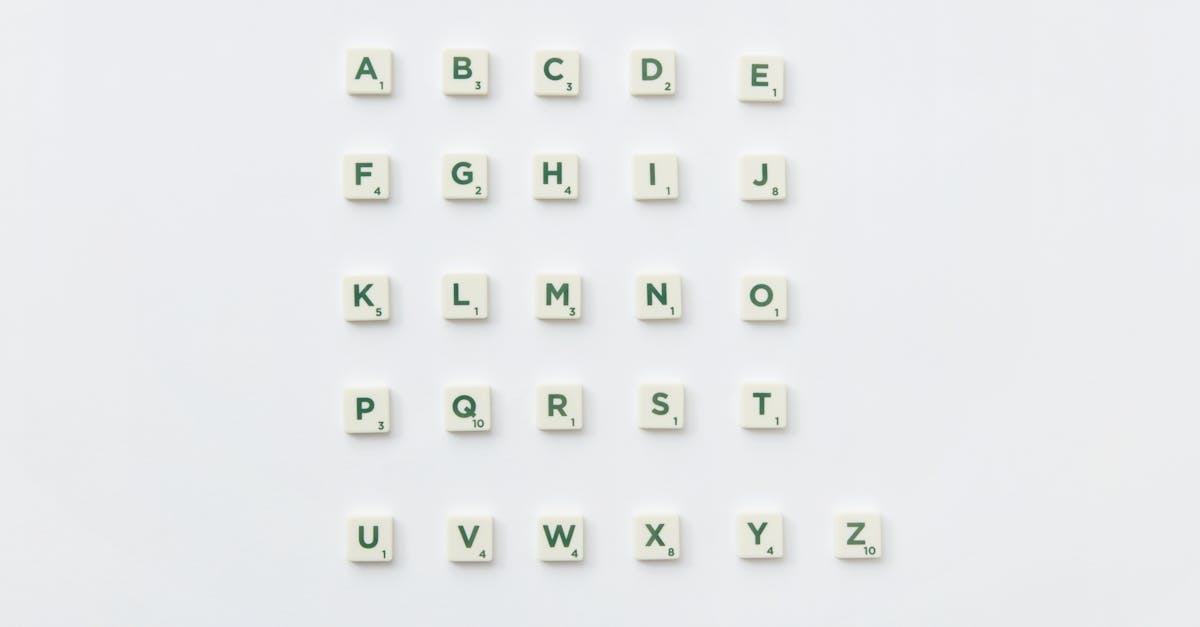
Why English Spelling Is Challenging
English spelling rules are notoriously complex, inconsistent, and riddled with exceptions. George Bernard Shaw famously (though perhaps apocryphally) suggested that "fish" could be spelled "ghoti"—with "gh" as in "enough," "o" as in "women," and "ti" as in "nation." While this example is exaggerated, it illustrates a genuine problem: English spelling does not reliably correspond to pronunciation.
The root cause is the history of the English language. English has borrowed words from dozens of languages—Latin, Greek, French, Norse, and many others—each bringing its own spelling conventions. When English spelling was largely standardized by early printers in the 15th and 16th centuries, pronunciation continued to change dramatically, especially during the Great Vowel Shift (1400–1700). The result is a spelling system that often reflects how words were pronounced 500 years ago.
Despite these challenges, English spelling rules do exist, and they work more often than not. The rules in this guide, while imperfect, will help you spell the majority of English words correctly. For the exceptions, a good dictionary is your best friend.
A Brief History of English Spelling
Old English spelling was largely phonetic—words were spelled as they sounded. The Norman Conquest of 1066 introduced French scribal conventions, changing many spellings. For example, Old English "cwen" became "queen" (French scribes used "qu" instead of "cw").
The introduction of the printing press in 1476 by William Caxton began the process of spelling standardization, but Caxton's typesetters were often Dutch and sometimes imposed their own conventions. The word "ghost," for example, gained its silent "h" from Dutch influence.
During the Renaissance, scholars "corrected" English spellings to reflect Latin origins, adding silent letters: "debt" gained a "b" from Latin debitum (even though English had borrowed the word from French dette, without the "b"). "Receipt" gained a "p" from Latin receptum. These scholarly interventions made spelling less phonetic, not more.
Noah Webster's dictionary (1828) reformed American spelling, simplifying some words: "colour" → "color," "centre" → "center," "defence" → "defense." These differences between British and American spelling persist today.
Rule 1: I Before E Except After C
The most famous English spelling rule states: I before E, except after C, when the sound is /iː/ (as in "ee").
I before E (when it sounds like "ee"):
- believe, achieve, field, piece, grief, chief, thief, shield, yield, brief, relief, fierce, pier
E before I after C:
- receive, ceiling, deceive, conceive, perceive, receipt
Important exceptions: weird, seize, either, neither, protein, caffeine, species, science, sufficient, ancient. These exceptions are numerous enough that some linguists argue the rule is not very useful. However, for the /iː/ sound specifically, the rule holds in most cases.
When the sound is not /iː/: The rule does not apply when the vowel combination makes a different sound: neighbor, weigh, eight, vein, their, foreign, height (these use /eɪ/ or /aɪ/ sounds).
Rule 2: Doubling Consonants
When adding a suffix that begins with a vowel (-ing, -ed, -er, -est, -able) to a word that ends in a single consonant preceded by a single vowel:
Double the consonant if:
- The word has one syllable: run → running, stop → stopped, big → bigger, hot → hotter, sit → sitting, swim → swimmer
- The word has multiple syllables AND the stress falls on the last syllable: begin → beginning, occur → occurred, prefer → preferred, admit → admitted, commit → committed
Do NOT double the consonant if:
- The word ends in two consonants: help → helping, start → started
- The word ends in a consonant preceded by two vowels: rain → raining, read → reading
- The stress does NOT fall on the last syllable: open → opening, happen → happened, visit → visiting, benefit → benefited
- The word ends in W, X, or Y: show → showing, fix → fixed, play → playing
This rule explains many of the commonly misspelled words involving double letters.
Rule 3: The Silent E Rules
Many English words end in a silent "e" that affects the pronunciation of the preceding vowel. The rules for what happens to this "e" when adding suffixes are important.
Drop the Silent E Before Vowel Suffixes
When adding a suffix that begins with a vowel (-ing, -ed, -able, -ous, -ive), drop the silent E:
- make → making, love → loving, give → giving, write → writing
- hope → hoped, like → liked, use → used
- desire → desirable, value → valuable, move → movable
- fame → famous, nerve → nervous
Keep the Silent E Before Consonant Suffixes
When adding a suffix that begins with a consonant (-ment, -ness, -ful, -ly, -less), keep the silent E:
- achieve → achievement, manage → management
- like → likeness, love → lovely, care → careful
- hope → hopeless, use → useful
Exceptions
- Keep the E after soft C or G before A or O: noticeable, changeable, courageous, outrageous
- Drop the E in some words before consonant suffixes: argue → argument, true → truly, judge → judgment (American), whole → wholly
Rule 4: Words Ending in Y
The behavior of final Y depends on whether it is preceded by a consonant or a vowel.
Consonant + Y: Change Y to I Before Most Suffixes
- happy → happiness, happier, happiest, happily
- carry → carried, carrier, carries
- beauty → beautiful, beautify
- easy → easier, easily, easiness
Exception: Keep the Y before -ing: carry → carrying, study → studying, try → trying (to avoid double I)
Vowel + Y: Keep the Y
- play → played, playing, player, playful
- enjoy → enjoyed, enjoying, enjoyable
- stay → stayed, staying
Exceptions: day → daily, say → said, pay → paid, lay → laid
Rule 5: Forming Plurals
The basic rule for forming English plurals is to add -s. But several important variations apply:
- Most nouns: Add -s. cat → cats, book → books, tree → trees
- Words ending in S, SH, CH, X, Z: Add -es. bus → buses, dish → dishes, church → churches, box → boxes, buzz → buzzes
- Words ending in consonant + Y: Change Y to I and add -es. city → cities, baby → babies, story → stories
- Words ending in vowel + Y: Add -s. boy → boys, key → keys, day → days
- Words ending in F or FE: Change to -ves (usually). knife → knives, leaf → leaves, wife → wives. Exceptions: roof → roofs, chief → chiefs, belief → beliefs
- Words ending in O: This is inconsistent. Some add -es (potato → potatoes, tomato → tomatoes, hero → heroes), others add -s (photo → photos, piano → pianos, zoo → zoos)
- Irregular plurals: child → children, mouse → mice, foot → feet, tooth → teeth, man → men, woman → women, person → people, ox → oxen, goose → geese
- Unchanged plurals: sheep → sheep, deer → deer, fish → fish, species → species
Rule 6: Adding Prefixes
When adding a prefix to a word, the spelling of the base word does not change. This is a simple, consistent rule, but it sometimes creates double letters that look unusual:
- un + necessary = unnecessary (double N)
- mis + spell = misspell (double S)
- dis + satisfied = dissatisfied (double S)
- re + enter = reenter (double E)
- over + rate = overrate (double R)
- un + natural = unnatural (double N)
Silent Letters in English
English contains many words with silent letters—letters that are written but not pronounced. These silent letters exist because of historical pronunciation changes and etymological spelling conventions.
- Silent K: knife, knee, know, knight, knock, knot, knit (K was pronounced in Old English)
- Silent W: write, wrong, wrist, wrap, wreck, wreath (W was pronounced in Old English)
- Silent B: lamb, thumb, climb, bomb, doubt, debt, subtle (some from Old English, some added by scholars)
- Silent G: gnaw, gnat, gnome, sign, design, foreign (some from Old English, some from Greek/Latin)
- Silent H: hour, honest, honor, heir, ghost, rhythm, exhaust
- Silent P: pneumonia, psychology, psalm, receipt
- Silent L: salmon, calm, talk, walk, half, could, would, should
- Silent T: castle, listen, whistle, fasten, Christmas, mortgage
Understanding the etymology of words with silent letters can help you remember which letters are there, even when they are not pronounced.
British vs American Spelling
Several systematic spelling differences exist between British and American English, most traceable to Noah Webster's spelling reforms:
- -our / -or: colour/color, favour/favor, honour/honor, behaviour/behavior
- -re / -er: centre/center, theatre/theater, fibre/fiber, metre/meter
- -ise / -ize: organise/organize, realise/realize (though -ize is also accepted in British English by some publishers)
- -ence / -ense: defence/defense, licence/license, offence/offense
- Double L: travelled/traveled, cancelled/canceled, modelling/modeling (British doubles the L; American does not)
- -ogue / -og: catalogue/catalog, dialogue/dialog, analogue/analog
Neither system is "more correct"—each is standard within its own variety. The important thing is consistency: choose one system and use it throughout a single document.
Strategies for Better Spelling
- Read extensively. Frequent exposure to correctly spelled words builds visual memory. The more you read, the more "wrong" spellings will simply look wrong to you.
- Learn the rules AND the exceptions. The rules in this guide work most of the time. For exceptions, consult a dictionary.
- Use mnemonics. Memory tricks for tricky words: "There's A RAT in separate," "A shirt has one Collar and two Sleeves" (necessary).
- Study word roots. Etymology reveals spelling patterns based on Latin, Greek, and other source languages.
- Write by hand. The physical act of writing words reinforces spelling in muscle memory.
- Keep a personal list. Track words you personally find difficult and review them regularly.
- Use spell-check wisely. Spell-check catches many errors but misses homophones. Use it as a safety net, not a substitute for knowledge.
- Practice commonly misspelled words. Focusing on the words that most people get wrong gives you the biggest improvement in accuracy.
- Learn pronunciation. While spelling and pronunciation do not always match in English, knowing the correct pronunciation can help you avoid some spelling errors.
English spelling may never be perfectly logical, but understanding its rules—and the historical reasons behind its irregularities—makes it far more manageable. With practice and the right strategies, anyone can become a confident English speller.