 Dictionary Wiki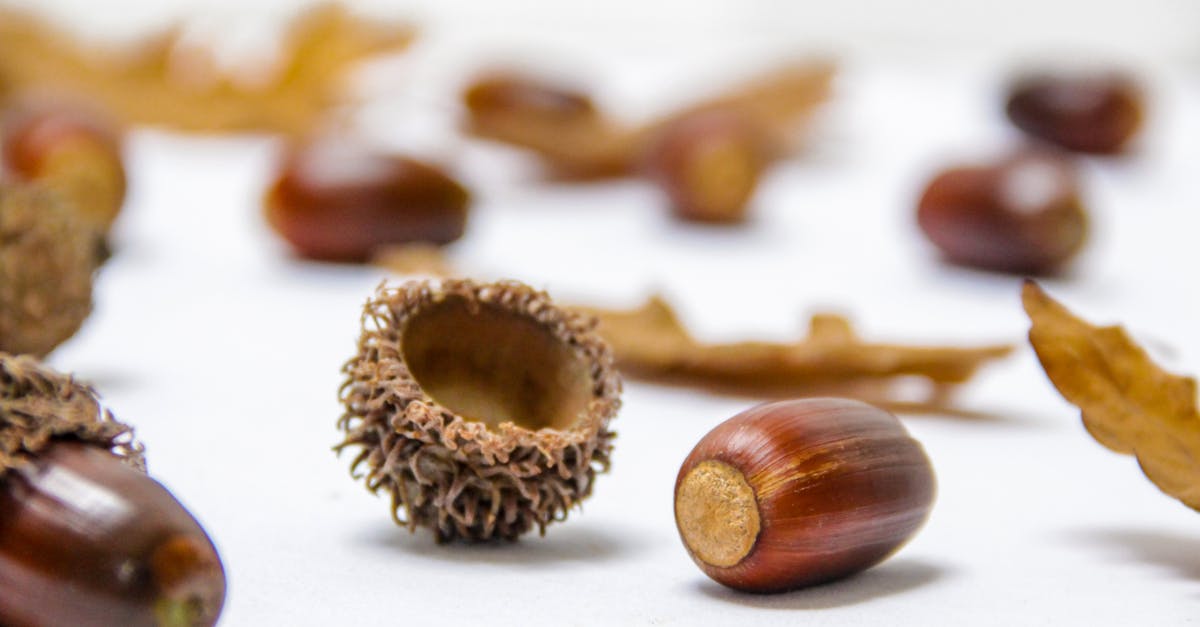
Table of Contents
Defining the Eggcorn
Say the phrase "nip it in the butt" out loud. It sounds almost right. It even seems to make a rough kind of sense — you're stopping something aggressively, like a nip on the backside. Except the real idiom is "nip it in the bud," a gardening image about cutting off a flower before it opens. That small slip, where the wrong version happens to carry its own workable logic, is an eggcorn.
An eggcorn is what you get when a listener swaps out part of an expression for something that sounds similar and feels meaningful. The substitution is wrong by convention, but it isn't nonsense the way a malapropism is. The listener's brain has done a tiny act of editing, rebuilding an unfamiliar phrase out of familiar parts. The word "eggcorn" itself is the most famous case: it stands in for "acorn," and you can almost see why — an acorn is a small, egg-shaped seed.
Eggcorns are reminders that we don't just record language passively. We interpret it on the fly, reaching for whatever meaning fits the context best. That interpretive reflex is what turns a misheard word into a plausible-sounding new one.
Where the Word Came From
The label was coined in September 2003 on the group blog Language Log. Linguist Mark Liberman wrote about a woman who had spelled "acorn" as "eggcorn," and his colleague Geoffrey Pullum suggested that this kind of error needed a dedicated name. Older categories like malapropism and mondegreen didn't quite capture what was happening — a substitution that was wrong, yes, but also quietly sensible.
The term caught on fast, partly because the example is so disarming. Within a few years, "eggcorn" was showing up in style guides, language columns, and eventually dictionaries. Merriam-Webster added it to its unabridged edition in 2015. There is something fitting about the etymology here: a word describing how people accidentally reinvent language was itself produced by that same process and then adopted on purpose.
The Mental Machinery Behind Them
Linguists call the process behind eggcorns "folk reanalysis." The idea is straightforward. A speaker meets a phrase they've only half-absorbed — maybe they heard it at a dinner party rather than reading it in a book, or maybe it contains an old word they can't place. Instead of shrugging, the brain reaches for nearby, familiar vocabulary that preserves roughly the right sound and roughly the right meaning.
Three features tend to show up together in a true eggcorn:
- A coherent line of reasoning. The person using the eggcorn can usually explain, when challenged, why their version seems to fit.
- An audible resemblance. Said out loud at normal speed, the eggcorn and the original are close enough to be confused.
- Semantic traction. The substitute word does real work. It offers a reading of the phrase that feels plausible, even if it's not the historical meaning.
"Old-timers' disease" for "Alzheimer's disease" is a textbook case. In everyday speech, the two openings sound alike, and the stand-in is perfect in context — Alzheimer's tends to affect older people. The speaker isn't flailing; they've found a reading of a medical name that fits what they already know.
A Field Guide to Common Eggcorns
Whole Idioms Reworked
- "Baited breath" for bated breath — breath dangled like bait vs. breath held in (abated).
- "Tow the line" for toe the line — pulling a rope together vs. standing in formation with your toes on a line.
- "Deep-seeded" for deep-seated — planted firmly in the soil vs. set deep like a chair in the ground.
- "Doggy dog world" for dog-eat-dog world — a world designed for dogs vs. brutal competition.
- "Nip it in the butt" for nip it in the bud — a sharp bite as correction vs. cutting off a flower before it opens.
- "Mute point" for moot point — a point too quiet to hear vs. a point not worth arguing.
- "Beckon call" for beck and call — a call that beckons vs. being summoned by gesture and voice.
- "Peaked my interest" for piqued my interest — pushed curiosity to a peak vs. pricked or stirred it.
Single-Word Swaps
- "Expresso" for espresso — pitched as the fast, express coffee.
- "Eggcorn" for acorn — the naming case itself.
- "Prostrate cancer" for prostate cancer.
- "Masonary" for masonry.
- "Windshield factor" for wind chill factor.
Compound Phrases That Got Rebuilt
- "For all intensive purposes" for for all intents and purposes.
- "Free reign" for free rein — unchecked rule vs. loosened horse reins.
- "Hone in" for home in — sharpening vs. honing in on a target like a guided missile.
- "Escape goat" for scapegoat — a goat making a getaway vs. a goat ritually sent away carrying blame.
- "Chomping at the bit" for champing at the bit.
- "Damp squid" for damp squib — a sodden sea creature vs. a firework that failed to go off.
- "Wreck havoc" for wreak havoc.
- "Tow-headed" for tow-headed (a trick entry — "tow" here really does mean pale flax fiber, so the standard form is already doing the job).
Eggcorn or Malapropism?
Both malapropisms and eggcorns involve a word that sounds something like the intended one. The separation comes down to whether the substitute makes sense.
Mrs. Malaprop, the character who gave malapropisms their name, calls someone "the very pineapple of politeness" when she means "pinnacle." Pineapples and politeness have no meaningful relationship; the sentence lands as comedy precisely because it falls apart under scrutiny. An eggcorn does the opposite. Call a person an "escape goat" and a listener can reconstruct a perfectly sensible reading on the spot: the goat slips away, the blame doesn't quite stick. The speaker has produced a sentence with a coherent logic, just not the historical one.
Eggcorn or Mondegreen?
A mondegreen is usually a misheard lyric or line of poetry. Someone hears "excuse me while I kiss the sky" and reports, straight-faced, that the singer wants to kiss some guy. The replacement is roughly phonetic, but it doesn't preserve any of the original meaning; the whole point is that it's a lyric lost in transmission.
Eggcorns usually operate at a smaller scale — a word or two inside a larger phrase — and they carry meaning with them. The line between the two isn't hard. Some misheard expressions could be filed either way, depending on whether you're more interested in the act of mishearing or the mini-theory of meaning the listener has built.
What Makes Them So Catchy
Eggcorns move through a language community quickly, especially when the original phrase includes a word almost nobody uses anymore. A few reasons:
- The internet accelerates them. Written eggcorns now spread the way spoken ones once did. Search autocomplete and social media threads repeat "for all intensive purposes" back at readers until it starts to look correct.
- Most idioms are learned by ear. People pick up phrases in conversation long before they ever see them in print. Unclear word boundaries in casual speech make swaps easy.
- The new version is self-justifying. Because eggcorns make sense, they don't trip an alarm. A reader can meet "deep-seeded anger" and move on without pausing.
- Old words lose their grip. When a standard phrase contains something like "bated" or "moot" that's otherwise extinct, a more familiar substitute is waiting.
When Eggcorns Become Standard English
A point worth dwelling on: eggcorns aren't just slips. They're one of the real engines of long-term language change. Enough people adopt a reinterpretation and it can harden into the default form, with the older version fading from memory entirely. The history of English is stacked with cases of this happening.
"Bridegroom" is a classic. In Old English it was "brydguma" — "bryd" (bride) plus "guma" (man). Once "guma" disappeared from the everyday vocabulary, speakers filled the gap with a word they still had, "groom," and the compound was reborn. "Bridegroom" has been standard for many centuries, but it began as an eggcorn. This whole pattern has a name: folk etymology, and it has reshaped hundreds of ordinary words.
So when does a stubborn mistake graduate into acceptable usage? That's a question for lexicographers and style editors, and the answer usually depends on how many people say it, how long they've been saying it, and how respectable the speakers are. Language is a record of what people actually do with it. Today's eye-roll may be tomorrow's entry in the dictionary.
Chris Waigl's Eggcorn Archive
In 2005, linguist Chris Waigl set up the Eggcorn Database at eggcorns.lascribe.net, a public catalogue of documented substitutions with attested examples pulled from real texts. Each entry lists the eggcorn alongside the accepted form, a short argument for why the swap feels natural, and sentences where it appears in the wild. For anyone studying this stuff — linguists, teachers, editors, or just curious readers — it's become the first place to look.
The Quiet Creativity of a Good Eggcorn
It's easy to treat eggcorns as embarrassing mistakes, the kind of thing you correct quietly and hope nobody noticed. That view misses what's interesting about them. Each eggcorn is a small piece of invented sense, the fingerprint of a brain determined not to let an unfamiliar word sit there meaningless. The person who says "damp squid" is doing something cognitively impressive: they've built a working reading of a dead metaphor, even if it isn't the one in the reference book.
Watch eggcorns for a while and you start to see language less as a fixed rulebook and more as a shared experiment. Every speaker is a participant, quietly proposing edits. Some of those edits get laughed off. Some get adopted by enough neighbors that they become the new default. That's how English has always worked, and eggcorns are one of the clearest places to see it happen.
Look Up Any Word Instantly on Dictionary Wiki
Get definitions, pronunciation, etymology, synonyms & examples for 1,200,000+ words.
Search the Dictionary