 Dictionary Wiki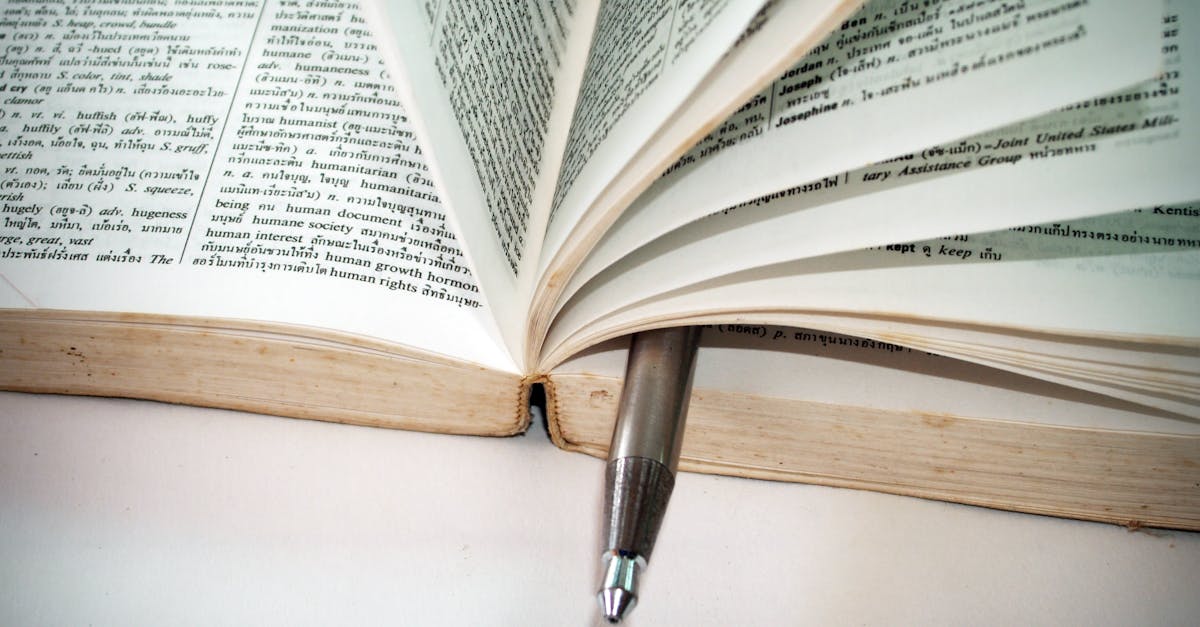
Dictionary Basics
A dictionary is a language reference that gathers words and explains what they mean, how they are pronounced, where they come from, and how they are used. In English, entries are usually arranged alphabetically, so a reader can move quickly from an unfamiliar word to reliable information about it.
The term "dictionary" traces back to Medieval Latin dictionarium, from dictio, meaning "a word" or "a saying." That history fits the job dictionaries have always done: they collect words and attach useful facts to them. Still, a modern dictionary is much more than a book of short meanings.
A well-built entry may give the spelling, pronunciation, grammatical category, several definitions, natural examples, word history, regional labels, and usage guidance. Some dictionaries add pictures, related terms, or data about how often a word appears. Digital dictionaries can add audio, links, and frequent updates as language changes.
It also helps to know what a dictionary is not. Most current dictionaries do not simply order people to speak or write in one approved way. They usually describe the language people actually use. That descriptive approach is central to lexicography, the craft and study of making dictionaries, though many dictionaries also offer guidance when a word or construction is likely to cause confusion.
What You Find in a Dictionary Entry
Whether you open a printed dictionary or search an online one, an entry is built from several standard parts. Knowing what each part does makes the entry easier to read and far more useful.
Entry Word or Lemma
The headword is the word being explained, normally shown in bold at the start of the entry. English dictionaries sort headwords alphabetically. The form chosen is usually the base form: a singular noun, an unconjugated verb, or the standard form of an adjective. You would normally look up "write," for example, rather than "wrote" or "writing."
How the Word Sounds
Many entries show how to say the word aloud. A dictionary might use the International Phonetic Alphabet (IPA), its own pronunciation system, or a respelling meant for general readers. The word "example," for instance, may appear as /ɪɡˈzæmpəl/ in IPA. Learning the basics of pronunciation in English helps you get more from these guides.
Grammatical Category
An entry identifies the word's job in a sentence: noun, verb, adjective, adverb, or another part of speech. Many English words can do more than one job, so a single entry may have several sections. "Light" can be a noun ("The light filled the room"), an adjective ("a light jacket"), or a verb ("They light the candles at dusk").
Meanings
Definitions are the central part of the entry. They state the meaning, or meanings, of a word in language suited to the dictionary's intended readers. When a word has several senses, dictionaries usually number them and place them in an order based on frequency, history, or logical relationship. Understanding how definitions work makes long entries less intimidating.
Word Origin
Many dictionaries include etymology: a short account of a word's earlier forms and source languages. This note, often set in brackets or a separate paragraph, may show a path through Latin, Greek, Old French, Old English, or another language. Studying word origins can make vocabulary easier to remember and can reveal connections among related words.
Examples in Context
Example phrases and sentences show the word at work. They can clarify which meaning is intended, reveal common grammar patterns, and show the situations where the word feels natural. Learner's dictionaries usually give especially generous examples because context is so helpful for people acquiring a language.
Labels and Usage Guidance
Entries often carry labels such as "slang," "technical," "archaic," "British English," or "informal." These labels tell you where, when, or by whom a word is usually used. Usage notes may also point out words that are often mixed up or constructions that some readers object to. A clear sense of formal versus informal English makes these labels easier to apply.
Major Kinds of Dictionaries
No single dictionary serves every purpose equally well. Different dictionaries are built for different readers, tasks, and levels of detail. Knowing the main dictionary types helps you choose the right reference.
Dictionaries for Everyday Use
General-purpose dictionaries cover the common vocabulary of a language along with many less common words. Familiar examples include Merriam-Webster's Collegiate Dictionary, the Oxford English Dictionary (OED), and Collins English Dictionary. Smaller desk dictionaries may contain 50,000–100,000 entries, while unabridged dictionaries can include more than 400,000.
Dictionaries for Learners
Learner's dictionaries are made for people studying English as an additional language. They use simpler defining words, provide many examples, and often explain grammar patterns more fully than standard dictionaries do. The Oxford Advanced Learner's Dictionary and the Longman Dictionary of Contemporary English are well-known examples, and they are especially useful for growing your English vocabulary.
Two-Language Dictionaries
Bilingual dictionaries connect words in one language with words or phrases in another. A French-English dictionary, for example, helps users move between French and English. This is not as simple as matching one word to one word, because meanings often overlap imperfectly across languages.
Subject-Specific Dictionaries
Specialized dictionaries focus on a field such as medicine, law, computing, engineering, music, or science. They can explain technical vocabulary in greater depth than a general dictionary, which must divide its space across the whole language.
Dictionaries That Track History
A historical dictionary follows words across time. It records early appearances, changes in meaning, and dated quotations that show how each sense was used. The Oxford English Dictionary is the best-known historical dictionary for English.
Thesauruses and Related Word Books
A thesaurus is not exactly a dictionary, but it belongs to the same family of reference works. Instead of explaining words mainly by definition, it groups words by meaning and lists synonyms and antonyms. Writers use thesauruses to search for a better fit, but it is still wise to check definitions. Knowing the dictionary-thesaurus distinction helps you use each tool well.
The Story of Dictionaries in Brief
The recorded history of dictionaries reaches back thousands of years. Some of the earliest known word lists were Sumerian-Akkadian glossaries from ancient Mesopotamia, created around 2300 BCE. Written on cuneiform tablets, they helped scribes work between languages.
In medieval Europe, monks often added Latin explanations beside difficult words in manuscripts. This practice was called glossing. Over time, such notes were gathered into separate glossary collections known as glossaria.
English dictionaries began appearing in the early seventeenth century. Robert Cawdrey's A Table Alphabeticall (1604) is widely treated as the first monolingual English dictionary. It was modest by modern standards, with about 2,500 "hard words" and short explanations intended to help readers understand learned or borrowed terms.
A major turning point came in 1755 with Samuel Johnson's A Dictionary of the English Language. Johnson included roughly 42,773 entries, wrote memorable definitions, and supported many entries with quotations from English literature. His dictionary became the leading English authority for more than a century.
Noah Webster's An American Dictionary of the English Language followed in 1828. Webster wanted, in part, to define a distinctly American English. His work helped popularize spelling differences that still separate American and British English, including "color" rather than "colour" and "center" rather than "centre."
In 1857, the Philological Society of London called for a complete historical dictionary of English. That project became the Oxford English Dictionary. Its first edition appeared in installments from 1884 to 1928 and took more than 70 years to complete. The OED set out to trace English words from their earliest recorded uses to modern meanings, using dated quotations for evidence. It remains one of the richest records of the history of English.
How Dictionaries Get Made
Making a dictionary is slow, evidence-heavy work. It may involve many lexicographers, editors, pronunciation specialists, etymologists, technical advisers, and production staff. The finished entry can look simple, but a great deal of research sits behind it.
Building the Evidence Base
Modern dictionary teams rely on corpora: huge searchable collections of real language. These databases may include books, newspapers, magazines, websites, academic writing, transcripts of speech, and other sources. A large corpus can contain billions of words, giving lexicographers direct evidence of how vocabulary is used rather than forcing them to rely on guesswork.
Finding Patterns and Citations
Lexicographers examine corpus evidence to spot new words, new meanings, changing grammar patterns, and shifts in tone or frequency. In the past, readers copied useful examples by hand onto citation slips. Today, software can help identify patterns, count occurrences, and flag emerging vocabulary, though human judgment remains essential.
Writing the Definitions
Definition writing is a precise craft. A definition has to be accurate, brief, and clear for the intended audience. Lexicographers compare many examples of a word in use, separate its senses, decide which meanings deserve inclusion, and arrange them in a helpful order. The goal is to describe the meaning without being vague or circular.
Checking and Revising Entries
Entries normally pass through several rounds of review. Experts may check scientific, legal, medical, or other technical terms. Pronunciation editors review sound information, etymologists verify origin notes, and senior editors look for consistency, clarity, and accuracy across the dictionary.
Rules or Records? Two Approaches
A key divide in lexicography is the difference between prescriptive and descriptive treatment of language. The difference affects how dictionaries are written and how readers should understand them.
A prescriptive dictionary presents language as a set of rules to follow. It may identify one form as correct, warn against another, or mark a usage as improper or nonstandard. Earlier dictionaries, including Johnson's, often leaned in this direction.
A descriptive dictionary records how speakers and writers actually use words. Most modern dictionaries are chiefly descriptive: they gather evidence from real texts and speech, then define words on that basis. When new English words appear, descriptive dictionaries consider whether the evidence shows broad and sustained use.
Real dictionaries usually mix the two approaches. They describe observed usage, but they also provide notes about register, region, disputed forms, and likely reader reactions. That guidance helps users choose language appropriately without pretending that one editor can personally approve or reject the living language.
"A dictionary is not a law book. It is a record of how language is used, not how some authority thinks it should be used." — Modern lexicographic principle
Why Dictionaries Still Count
Search engines and AI tools can answer many language questions quickly, but dictionaries still do work those tools cannot replace. They give structured, edited, evidence-based information about words.
Shared Standards for Spelling and Form
Dictionaries help stabilize the written form of a language. English varies by region and community, as shown by dialects and accents in English, but dictionaries provide a shared reference point. Standard spelling depends especially heavily on dictionary authority.
Reading, School, and Independent Learning
Dictionaries are basic tools for education and literacy. Students around the world learn how to consult a dictionary so they can solve word problems on their own. For developing readers, that independence matters: an unfamiliar word no longer has to stop the whole reading process.
Clear Communication at Work
Some settings demand exact wording. In medicine, law, science, technology, and similar fields, a misunderstood term can have serious consequences. Specialized dictionaries help professionals share a common vocabulary and reduce ambiguity.
A Record of Culture
Dictionaries also preserve evidence of culture. They show which words mattered at a particular time, which terms disappeared, and which meanings shifted. Historical dictionaries make it possible to study society through vocabulary. Looking at words whose meanings changed can reveal social, technological, and cultural movement.
Support for English Learners
For people learning English as another language, dictionaries remain essential. They supply meaning, grammar, pronunciation, and usage information in one place. English dictionaries on the web have made that support easier to reach from almost anywhere.
How Digital Tools Changed Dictionaries
The move from print to digital formats has reshaped what dictionaries can do. Printed dictionaries are still useful, but online and app-based dictionaries can offer speed, sound, search tools, and frequent revision.
Fast Lookup Anywhere
An online dictionary can be searched from a phone, tablet, or computer in seconds. You do not need to pull a volume from a shelf, choose the right book in a set, or scan guide words at the top of pages. Type the word, and the entry appears almost immediately.
Recorded Pronunciations
Digital entries can include audio from speakers pronouncing the word. That feature is especially helpful when a reader does not know IPA or when spelling gives little clue to pronunciation. Hearing the word can make the phonetic symbols easier to understand, too.
Frequent Revisions
A printed dictionary begins aging as soon as it is published. Digital dictionaries can add new entries, revise definitions, and update usage notes much more often. That flexibility matters because language keeps changing: new terms appear, old words gain new meanings, and social expectations around usage can shift.
Links Between Related Words
Online dictionaries can connect an entry to synonyms, antonyms, word families, etymological relatives, and related topics. Those links turn a single lookup into a broader path through vocabulary, which is useful for writers, students, and curious readers.
More Ways to Search
Print lookup depends on knowing roughly how a word is spelled. Digital tools can be more forgiving. Some allow wildcard searches, sound-based searches, reverse lookups, or searches by meaning. Others let you explore vocabulary through roots, prefixes, and suffixes.
Picking the Best Dictionary for the Job
The best dictionary depends on what you need it to do. A casual lookup, a research project, a translation task, and a technical question may call for different references.
Everyday Lookup Needs
For ordinary reading and writing, choose a respected general dictionary. Merriam-Webster is a common choice for American English, while the Oxford Dictionary of English is a common choice for British English. Both have print and online forms.
Help for English Students
If you are learning English, a learner's dictionary is usually better than a standard adult dictionary. Look for simple definitions, abundant examples, grammar notes, and clear pronunciation help. The Oxford Advanced Learner's Dictionary and Longman Dictionary of Contemporary English are strong options.
Tools for Writers and Editors
Writers often need more than one reference. A solid dictionary gives meaning and usage; a good thesaurus helps with word choice. A usage guide such as Merriam-Webster's Dictionary of English Usage can also explain disputed or easily confused constructions. Pairing dictionary work with basic English grammar leads to cleaner writing.
Research and Historical Study
For deep work on a word's history, the Oxford English Dictionary is the leading English resource. For American regional vocabulary, the Dictionary of American Regional English (DARE) is especially valuable.
Technical or Professional Fields
If you work in a specialized area, use a dictionary made for that field. Doctors, lawyers, engineers, scientists, musicians, and software professionals all deal with terms that a general dictionary may define only briefly.
Common Questions
How many words are in the English language?
There is no single tidy number, because "word" can be counted in different ways. Do inflected forms count separately? What about obsolete words, scientific terms, slang, or regional expressions? The second edition of the Oxford English Dictionary has about 600,000 entries, though many are old, rare, or highly specialized. By contrast, the most frequently used English words in ordinary conversation and writing amount to only a few thousand.
How often are new words added to dictionaries?
Large dictionary publishers add new vocabulary regularly, often in batches ranging from hundreds to thousands of entries each year. Merriam-Webster and Oxford, for example, commonly publicize new additions. A word is not added just because one person uses it once; lexicographers look for repeated use in many sources over time. The route by which new words reach the dictionary is based on evidence.
What is the difference between a dictionary and an encyclopedia?
A dictionary explains words: meanings, spellings, pronunciations, grammar, origin, and usage. An encyclopedia explains subjects: people, places, events, processes, and ideas. A dictionary entry for "photosynthesis" would tell you what the word means and how it functions; an encyclopedia article would give a fuller account of the biological process.
Can a word be removed from the dictionary?
Words are seldom erased from major dictionaries, especially historical ones. In shorter desk or school dictionaries, editors may leave out obsolete or very rare terms to make room for newer or more useful entries. Unabridged and historical dictionaries usually keep old words because they are part of the written record.
Who decides what goes in a dictionary?
Lexicographers make inclusion decisions by studying evidence from corpora and other language records. They look for words used by many people, in varied sources, over a sustained period. There is no single official gatekeeper who approves English words. Actual usage is the main test.
A good dictionary is both practical and historical: it helps you solve today's word question while preserving evidence of how the language has been used. Whether you are checking a spelling, learning a new term, writing professionally, or studying the past, the right dictionary remains one of the most dependable language tools available.
Look Up Any Word Instantly on Dictionary Wiki
Get definitions, pronunciation, etymology, synonyms & examples for 1,200,000+ words.
Search the Dictionary