
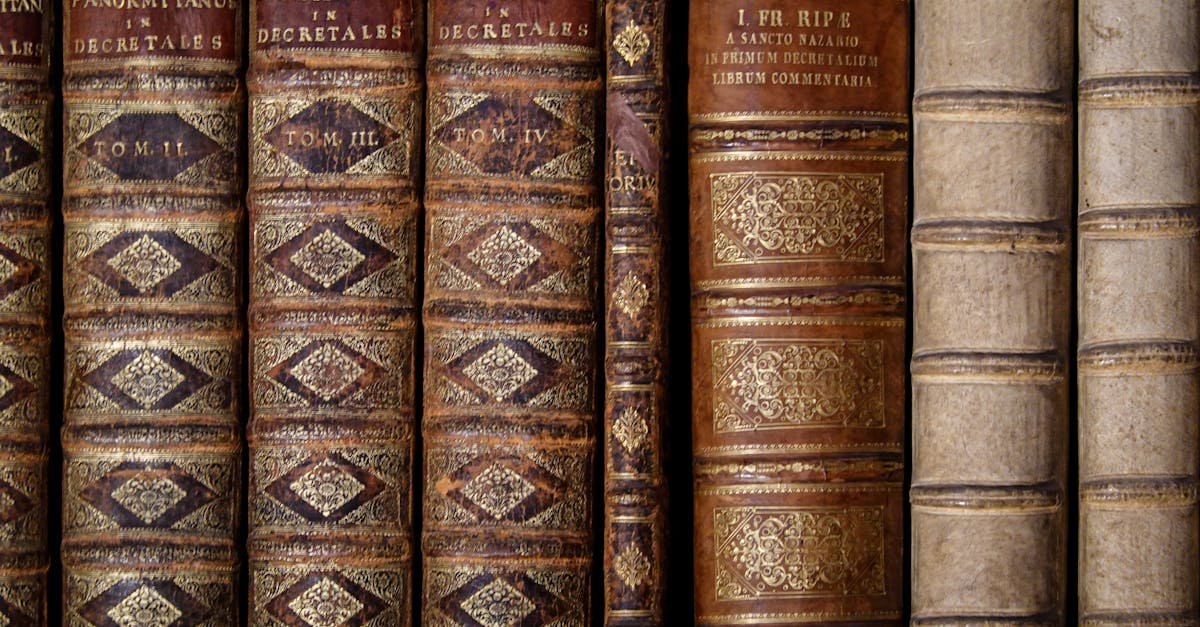
Introduction
The history of dictionaries is a story that spans over four thousand years of human civilization. From the earliest scratched cuneiform tablets in ancient Mesopotamia to the sophisticated digital platforms of today, dictionaries have evolved alongside human language, technology, and intellectual ambition. Understanding this history reveals not just how dictionaries have changed, but how our relationship with language itself has transformed over the millennia.
The impulse to create dictionaries—to list, organize, and explain words—is deeply human. Whenever cultures have needed to communicate across language barriers, preserve knowledge, or standardize communication, dictionaries have been among the first tools they have created. The history of dictionaries is, in many ways, the history of human efforts to understand and master the power of words.
Ancient Word Lists and Glossaries
The earliest known ancestors of the modern dictionary were created around 2300 BCE in ancient Mesopotamia. Sumerian scribes produced cuneiform tablets that listed words in Sumerian alongside their equivalents in Akkadian, the language that was gradually replacing Sumerian as the region's lingua franca. These bilingual word lists served a practical purpose: they helped scribes work across languages in an increasingly multilingual society.
One of the most significant of these ancient word lists is the Urra=hubullu, a Sumerian-Akkadian lexical series organized thematically rather than alphabetically. It grouped words by topic—animals, plants, wooden objects, stones, metals—providing a comprehensive inventory of the vocabulary needed for administrative, religious, and scholarly work.
Ancient Egypt produced similar reference materials. Egyptian scribes compiled word lists for training purposes, and the Rosetta Stone (196 BCE), while not a dictionary, demonstrated the multilingual needs that drive dictionary creation—it presented the same text in hieroglyphic, Demotic, and Greek scripts.
In ancient China, the Erya, compiled around the 3rd century BCE, is considered one of the oldest surviving Chinese dictionaries. It organized words by semantic categories and provided explanations of terms found in classical texts. The Shuowen Jiezi, completed around 100 CE, was the first Chinese dictionary to analyze the structure of characters, grouping them by radicals—a system still used in Chinese dictionaries today.
Ancient India produced remarkable lexicographic works as well. The Amarakosha, written by the Sanskrit scholar Amarasimha around the 4th century CE, was a thesaurus-like work that organized Sanskrit words into thematic groups with verses that could be memorized.
In the Islamic world, Arabic lexicography flourished from the 8th century onward. Al-Khalil ibn Ahmad's Kitab al-Ayn (8th century) is considered the first comprehensive Arabic dictionary, organized by the phonetic properties of sounds. These Arabic scholarly traditions significantly influenced European intellectual life and, indirectly, the development of Western dictionaries.
Medieval Glossaries and Early Compilations
During the medieval period in Europe, the primary language of learning was Latin. Glossaries—collections of difficult words with explanations—were essential tools for monks and scholars reading classical and religious texts.
The practice of "glossing" involved writing explanations of difficult Latin words between the lines or in the margins of manuscripts. Over time, these marginal notes were compiled into separate glossary collections. One of the most influential was the Elementarium Doctrinae Rudimentum by Papias (c. 1053), which organized Latin words alphabetically and provided definitions and etymological information.
As European vernacular languages developed, bilingual glossaries connecting Latin to local languages became increasingly important. In England, Anglo-Saxon glossaries translated Latin terms into Old English, serving as precursors to the monolingual English dictionaries that would emerge centuries later.
The invention of the printing press by Johannes Gutenberg around 1440 revolutionized dictionary-making. Previously, dictionaries had been laboriously copied by hand, limiting their distribution. Print technology made it possible to produce multiple identical copies, ensuring consistency and making dictionaries accessible to a much wider audience.
The First English Dictionaries
The English language did not have its own dictionary until the early 17th century. The first monolingual English dictionary is generally considered to be Robert Cawdrey's A Table Alphabeticall, published in 1604. It was a modest work containing approximately 2,560 entries, focused primarily on "hard words"—learned, borrowed, or technical terms that ordinary readers might not understand.
Cawdrey's title page reveals the dictionary's intended audience: it was designed for "Ladies, Gentlewomen, or any other unskilfull persons." The book did not aim to cover the entire English vocabulary; rather, it helped readers decode the Latinate and scholarly vocabulary that was flooding into English during the Renaissance.
Following Cawdrey, a series of increasingly comprehensive English dictionaries appeared throughout the 17th century:
- John Bullokar's An English Expositor (1616): Expanded on Cawdrey's work with more entries and fuller definitions.
- Henry Cockeram's The English Dictionarie (1623): The first book to use the word "dictionary" in its title, it included both hard-to-easy and easy-to-hard word lists.
- Thomas Blount's Glossographia (1656): Contained about 11,000 entries with etymologies, making it the first English dictionary to consistently include word origins.
- Edward Phillips's The New World of English Words (1658): An ambitious work that expanded coverage significantly and included some encyclopedic content.
These early dictionaries were all "hard word" dictionaries—they focused on difficult or unusual vocabulary. The idea of a dictionary that covered all English words, including common everyday terms, had not yet been conceived.
Samuel Johnson's Dictionary (1755)
The publication of Samuel Johnson's A Dictionary of the English Language in 1755 was a watershed moment in the history of dictionaries. Johnson's dictionary was the first truly comprehensive attempt to document the English language as a whole, not just its difficult words.
Johnson was commissioned by a group of London booksellers in 1746. He initially estimated the project would take three years; it ultimately took nine. Working in a garret at 17 Gough Square, London, with the help of six assistants (mostly Scottish, which amused Johnson), he compiled approximately 42,773 entries.
What made Johnson's dictionary revolutionary was not just its scope but its method. Johnson was the first English lexicographer to systematically illustrate definitions with quotations from respected literary sources—Shakespeare, Milton, Dryden, Pope, and many others. Over 114,000 illustrative quotations demonstrated how words were actually used by skilled writers.
Johnson's definitions were also notable for their precision, wit, and occasional personal commentary. His famous definition of "lexicographer" as "a writer of dictionaries; a harmless drudge" reveals his self-deprecating humor. His definition of "oats" as "a grain, which in England is generally given to horses, but in Scotland supports the people" reflects his famous prejudice against Scotland.
"Dictionaries are like watches; the worst is better than none, and the best cannot be expected to go quite true." — Samuel Johnson
Johnson's dictionary dominated English lexicography for over a century. It established standards for dictionary-making that influenced all subsequent English dictionaries, including the organization of entries, the use of illustrative quotations, and the inclusion of etymological information.
Noah Webster and American English
While Johnson's dictionary defined the standard for British English, American English found its champion in Noah Webster. A Connecticut schoolteacher, lawyer, and ardent nationalist, Webster believed that the newly independent United States needed its own linguistic identity, distinct from British norms.
Webster's first major work was A Compendious Dictionary of the English Language (1806), but his masterpiece was An American Dictionary of the English Language, published in 1828 when Webster was 70 years old. This monumental work contained approximately 70,000 entries—significantly more than Johnson's dictionary—and introduced the spelling reforms that distinguish American from British English to this day.
Webster's spelling changes were deliberate and principled. He simplified "colour" to "color," "centre" to "center," "defence" to "defense," and "travelling" to "traveling." He argued that these changes made spelling more logical, more phonetic, and distinctly American. Not all of Webster's proposed changes stuck—he also advocated for "wimmen" instead of "women" and "tung" instead of "tongue," but these never caught on.
Beyond spelling, Webster's dictionary reflected American life and vocabulary. It included words and meanings specific to American experience—terms from politics, geography, agriculture, and daily life in the young republic. After Webster's death in 1843, the rights to his dictionary were purchased by George and Charles Merriam, founding the Merriam-Webster company that continues to publish dictionaries today.
The Oxford English Dictionary
The most ambitious dictionary project in the history of dictionaries began in 1857 when the Philological Society of London declared that existing English dictionaries were incomplete and called for a comprehensive new dictionary that would trace every word in the language from its earliest recorded use.
The project, initially called A New English Dictionary on Historical Principles, was eventually taken over by Oxford University Press. Its first editor, Herbert Coleridge, died of tuberculosis in 1861. His successor, Frederick Furnivall, was brilliant but disorganized. It was not until James Murray took over as editor in 1879 that the project found its footing.
Murray built a famous "Scriptorium"—a corrugated iron shed in his garden in Mill Hill, London—where he and his assistants processed millions of citation slips sent in by volunteer readers around the English-speaking world. The most prolific contributor was W.C. Minor, who sent thousands of quotations from Broadmoor Criminal Lunatic Asylum, where he was confined for murder—a story memorably told in Simon Winchester's The Professor and the Madman.
The first fascicle, covering A–Ant, was published in 1884. The complete first edition, in ten volumes, was not finished until 1928—over 70 years after the project began. By then, the entries in the early volumes were already decades out of date, necessitating supplements.
The OED remains the most comprehensive historical dictionary of English. Its current online edition contains over 600,000 entries and three million illustrative quotations, covering the entire history of the English language from Old English to the present day. It continues to be revised and expanded continuously.
Twentieth-Century Developments
The twentieth century brought several important developments in the history of dictionaries.
Descriptive vs. Prescriptive Approaches
The publication of Webster's Third New International Dictionary in 1961 sparked a fierce controversy. Its editor, Philip Gove, took a firmly descriptive approach, documenting how English was actually used rather than prescribing how it should be used. The dictionary included words and usages that many considered slang or incorrect, such as "ain't." Critics accused the dictionary of abdicating its responsibility to uphold standards; supporters argued that a dictionary's job is to describe language, not police it.
Learner's Dictionaries
A.S. Hornby's Oxford Advanced Learner's Dictionary, first published in 1948, pioneered the concept of dictionaries designed specifically for English language learners. Using a controlled defining vocabulary and providing extensive grammatical information, learner's dictionaries recognized that non-native speakers have different needs from native speakers. This type of dictionary became enormously important as English spread as a global language.
Corpus-Based Lexicography
The development of electronic corpora—large databases of authentic language text—transformed how dictionaries were made. The COBUILD project, led by John Sinclair at the University of Birmingham, was a pioneer. The resulting Collins COBUILD English Language Dictionary (1987) was the first dictionary based entirely on corpus evidence, with definitions written in full sentences rather than traditional dictionary-style phrases.
The Digital Age of Dictionaries
The transition from print to digital media has been the most dramatic transformation in the history of dictionaries since the invention of printing itself.
The first digital dictionaries appeared on CD-ROM in the 1980s. The OED's second edition on CD-ROM (1989) was a landmark, allowing full-text searching across the entire dictionary for the first time. Users could search not just headwords but definitions, etymologies, and quotations—capabilities impossible with print.
The World Wide Web brought dictionaries online in the 1990s and 2000s. Free access to high-quality dictionary content—supported by advertising—democratized dictionary use. No longer was a comprehensive dictionary an expensive purchase; it was available to anyone with an internet connection.
Smartphone apps brought further transformation in the 2010s. Dictionary apps with voice search, camera-based word lookup, and offline access put comprehensive dictionaries in every pocket. The frequency and ease of dictionary consultation increased dramatically.
Collaborative dictionaries like Wiktionary (launched 2002) introduced a new model: community-created, openly licensed dictionary content that covers not just English but hundreds of languages. While quality varies, the breadth and speed of coverage often exceed traditional dictionaries.
The Future of Dictionaries
The history of dictionaries continues to be written. Several trends suggest where dictionaries are heading.
Artificial intelligence is increasingly assisting lexicographers in identifying new words and tracking usage changes. Machine learning algorithms can process billions of words of text to detect emerging vocabulary and shifting meanings far faster than human readers alone.
Integration with other technologies is making dictionaries more embedded in daily life. Built-in dictionary lookups in e-readers, web browsers, and word processors mean that consulting a dictionary requires minimal effort—a single click or tap.
The boundaries between dictionaries, thesauruses, encyclopedias, and other reference tools are blurring in the digital environment. Modern dictionary platforms combine functions that were once separate, providing definitions, synonyms, translations, pronunciation, and encyclopedic information in a single search.
Despite these changes, the core mission of dictionaries remains what it has been for over four thousand years: to help people understand words. The methods and media may change, but the human need to decode, learn, and master language endures.
Timeline of Major Dictionary Milestones
- c. 2300 BCE: Earliest known Sumerian-Akkadian word lists on cuneiform tablets
- c. 3rd century BCE: Erya, one of the oldest Chinese dictionaries
- c. 100 CE: Shuowen Jiezi, first Chinese dictionary to analyze character structure
- c. 4th century CE: Amarakosha, influential Sanskrit thesaurus
- 8th century: Kitab al-Ayn, first comprehensive Arabic dictionary
- 1604: Robert Cawdrey's A Table Alphabeticall, first monolingual English dictionary
- 1755: Samuel Johnson's A Dictionary of the English Language
- 1828: Noah Webster's An American Dictionary of the English Language
- 1852: Roget's Thesaurus first published
- 1884–1928: Oxford English Dictionary, first edition published in installments
- 1948: First edition of Oxford Advanced Learner's Dictionary
- 1961: Webster's Third New International Dictionary (descriptive approach controversy)
- 1987: Collins COBUILD, first fully corpus-based dictionary
- 1989: OED second edition published on CD-ROM
- 1990s–2000s: Major dictionaries go online
- 2002: Wiktionary launched as a collaborative dictionary
- 2010s: Mobile dictionary apps become ubiquitous