 Dictionary Wiki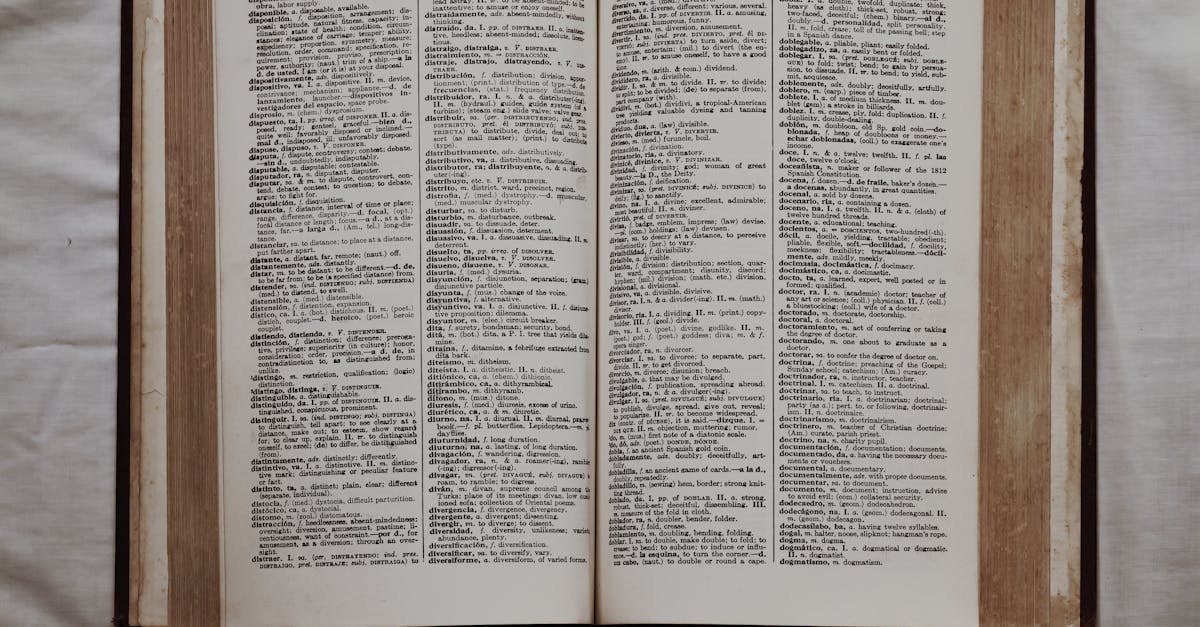
Why a Bigger Vocabulary Pays Off
Few skills compound the way vocabulary does. Every word you add gives you a slightly sharper tool for reading, writing, arguing a point, or understanding a podcast at full speed. Studies link vocabulary size to stronger reading comprehension, better grades, higher earnings, and the perception of competence in interviews and meetings. The effect is cumulative: more words lead to more reading, which leads to more words.
Estimates suggest adult native speakers command somewhere between 20,000 and 35,000 word families — a base word plus its inflections and derivatives. Voracious readers and specialists often push well past 50,000. No one hits a ceiling. English keeps inventing, borrowing, and recycling terms, and new words arrive in the language every year.
This guide works for two audiences: native speakers sharpening their edge, and learners growing an English vocabulary from scratch. The strategies below rest on decades of research in cognitive science, applied linguistics, and second-language acquisition. They succeed because they mirror the way the brain actually stores and retrieves words — through repetition, context, and meaningful use.
Strategy 1: Read Broadly, and Read With Attention
No single habit builds vocabulary faster than reading. Stephen Krashen's input hypothesis and a long line of follow-up studies point to the same conclusion: sustained reading for pleasure, at the right difficulty level, quietly adds words to your mental lexicon even when you are not trying to learn.
What Makes Reading So Effective
Each unfamiliar word you meet on the page arrives wrapped in context. The surrounding sentences hint at its meaning, tone, and register. Meet that same word in a novel, then in a news article, then in a podcast transcript, and your sense of it sharpens with every encounter. This background process — incidental learning — accounts for the majority of the words an educated person ever picks up, from childhood through adulthood.
Reading Habits That Build Vocabulary
- Keep a running word list. Jot down unfamiliar terms on a bookmark or in your phone. Look them up after the chapter, not in the middle of it.
- Mix genres aggressively. A thriller, a biography, a science essay, and a poetry collection each draw on different word pools. Variety multiplies exposure.
- Pick a text at the right stretch. If you recognize roughly 95% of the words, you can enjoy the flow while still meeting enough new ones to grow. Too easy and you stall; too hard and you quit.
- Resist the dictionary urge. Stopping every few sentences breaks the narrative and kills the habit. Guess first, confirm later — and only for words that seem important or keep coming back.
Strategy 2: Decode Words Through Roots, Prefixes, and Suffixes
Studying word roots, prefixes, and suffixes is probably the highest-leverage move a vocabulary builder can make. English absorbed a huge stock of Greek and Latin roots, and each root quietly powers dozens of modern words. Learn one root and you often unlock an entire neighborhood of vocabulary at once.
Take the Latin root spec/spect, meaning "to look." That one root opens up:
- inspect — look into
- respect — look back at, regard
- suspect — look under (at)
- perspective — a way of looking through
- spectator — one who looks
- prospect — look forward
- circumspect — looking all around, cautious
- retrospect — look backward
Everyday prefixes (un-, re-, pre-, dis-, mis-) and suffixes (-tion, -ment, -ness, -able, -ful, -less) tweak those roots in patterns you can predict. Once the pieces become familiar, strange words stop looking like noise and start looking like compounds. That grasp of etymology converts vocabulary work from memorization into detective work.
Strategy 3: Pick Up Meaning From Context
Context clues are the breadcrumbs a writer leaves — sometimes on purpose, sometimes not — that let a reader work out what an unfamiliar word means. Strong readers exploit them reflexively. Training the habit consciously pays off in both comprehension and long-term word retention.
The main flavors of context clue:
- Contrast or antonym clues: An opposite sits nearby to throw the new word into relief. "While her sister was loquacious, Mei barely spoke at the dinner." The antonym relationship does the work.
- Example clues: Concrete instances follow the word. "The chef loaded the tray with condiments — mustard, ketchup, relish, hot sauce, and a small jar of chutney."
- Direct definition: The sentence spells the meaning out for you. "The museum labeled the stone tools lithic, meaning made of stone."
- Synonym clues: A more familiar synonym sits in apposition. "Her voice was mellifluous, smooth and sweet as honey."
- Inferred clues: No direct signal, but the scene implies the meaning. "After two days lost in the desert, Omar was ravenous and devoured the entire loaf in under a minute."
Strategy 4: Get More Out of the Dictionary
A dictionary only earns its place on your desk if you work it properly. Skimming the first line of a definition and closing the tab barely dents a new word's foothold in memory. Deep lookups pay much better dividends.
- Read past the first sense. Most common words carry several senses. Skipping the later ones means missing the meaning that actually fits your sentence. Read every definition, plus the usage notes.
- Play the audio. Most online dictionaries bundle recorded pronunciations. Hearing the word lodges it deeper than reading alone and makes you more willing to say it aloud.
- Mine the example sentences. Real-world examples reveal collocations, typical subjects, and the grammar patterns the word prefers.
- Peek at the etymology. A brief origin story — Latin, Old Norse, Arabic trader slang — gives the word a memorable hook.
- Check the part of speech. The label (noun, verb, adjective, adverb) tells you how the word slots into sentences. Mismatch it and the sentence breaks.
Knowing how to use a dictionary with intent turns each lookup into a mini lesson rather than a passing glance.
Strategy 5: Review on a Spaced Schedule
Spaced repetition is one of the most battle-tested findings in learning science. The spacing effect — first documented by Hermann Ebbinghaus in the 1880s and replicated countless times since — shows that memory locks in better when reviews are distributed across days and weeks, not crammed into one sitting.
The rhythm looks roughly like this: meet a word today, review tomorrow, again in three days, then a week, then two weeks, then a month, then six months. Each time you recall the word correctly, the next gap stretches. Miss it, and the interval collapses back to the start.
Why does it work? Each retrieval that comes right at the edge of forgetting forces your brain to fight a little to pull the word back. That effortful pull is what cements it. Easy review sessions feel productive, but spaced, slightly uncomfortable reviews are what actually stick.
Tools like Anki, Mochi, and Quizlet run the math for you. You add a card, mark whether you knew it, and the algorithm schedules the next review at the right interval.
Strategy 6: Run a Personal Word Journal
A vocabulary journal — a paper notebook, a note in Obsidian, a Google Doc, whatever fits your life — is a running log of the words you care about. The physical act of writing anchors memory, and the file itself becomes a tailored reference you will actually open.
For each entry, capture:
- The source sentence that introduced the word
- The word plus a phonetic note for pronunciation
- Part of speech
- A definition in your own phrasing (never copied from the dictionary)
- Two example sentences — one lifted from where you found it, one you invent
- Synonyms, antonyms, and nearby words
- Any etymology that gives the word a story
Flip through your journal at least once a week. The combination of writing the entry, rereading it later, and stumbling across the word in the wild builds overlapping memory traces, and those layers are what make retention durable.
Strategy 7: Put New Words to Work
Passive vocabulary is the stock you recognize when reading or listening. Active vocabulary is the smaller, more valuable stock you can produce on demand in speech or writing. Bridging the gap between the two takes deliberate output.
- Explain new words to someone else. Teaching forces you to phrase the meaning clearly and exposes any gaps in your understanding. Try it on a friend, a colleague, or a language partner.
- Write your way in. Slip new vocabulary into emails, Slack messages, journal entries, blog posts. Writing gives you the luxury of time to check nuance and collocation.
- Say them out loud. Drop newly learned words into conversation on purpose. The first attempt may feel clunky; that awkwardness is the sound of the word becoming yours.
Strategy 8: Pick Up Whole Word Families
A word family is a cluster of words that share a stem: verbs, nouns, adjectives, and adverbs all spun off from the same root. When you meet one, grab the rest at the same time.
- decide (verb) → decision (noun) → decisive (adjective) → decisively (adverb) → indecision (noun)
- produce (verb) → product (noun) → production (noun) → productive (adjective) → productivity (noun) → producer (noun)
Learning families this way compounds your returns. One trip to the dictionary nets four or five connected words, and the internal logic between them — verb to noun, adjective to adverb — reinforces each one.
Strategy 9: Map Synonyms and Opposites
Words live in networks, not alone. Learning a word next to its close synonyms and its antonyms stitches it into a web of meaning that is easier to pull on later. A dense web means more retrieval paths, which means better recall.
Pick up laconic, for instance, and you may as well pick up its neighbors on the same day: terse, curt, succinct, pithy on one side; verbose, rambling, long-winded, garrulous on the other. Each word now sits in a small constellation instead of floating alone, and the contrasts teach you the subtle differences in tone and register.
A thesaurus is the obvious tool here. Use it to widen the net, then cross-check the shades of meaning in a dictionary before you start using any of the new words yourself — thesaurus entries rarely flag the subtle register differences that can embarrass a writer.
Strategy 10: Lean on Apps and Digital Tools
The software side of vocabulary building has matured enormously. A few standouts:
- Vocabulary.com: Adaptive quizzes that adjust to your level and feed you questions shaped around your weak spots.
- Quizlet: Flashcards plus matching games, timed tests, and huge libraries of shared decks for test prep (SAT, GRE, TOEFL).
- Anki: Free, open-source, and relentless. The spaced repetition engine is the gold standard, and community decks cover every major English frequency list.
- Word-of-the-day feeds: Email newsletters or push notifications from online dictionaries trickle one interesting word into your morning coffee.
- Browser pop-up dictionaries: Extensions like Google Dictionary or Mate Translate let you double-click a word on any web page and get an instant definition — friction goes to zero.
Putting Together a Weekly Plan
Strategies only add up when you run them on a schedule. A workable weekly plan looks like this:
- Pick a manageable target. Five to ten new words a week, mastered deeply, beats fifty skimmed. Numbers matter less than whether the words stick.
- Decide where your words come from. A novel, a podcast, a news app, a specialist word list — pick one or two primary sources so you are not scattered.
- Capture words the moment you meet them. Open your journal or flashcard app in the same minute. Memory fades fast.
- Use them the same week. Push each new word into a conversation, an email, or a journal entry within seven days.
- Review a little every day. Ten or fifteen minutes of flashcards or journal rereading beats a weekend cram. Consistency wins.
- Quiz yourself weekly. A quick Friday self-test separates the words that have landed from the ones that need another pass.
- Beginners: start with frequency. Learners should lean hard on the most common English words before chasing exotic ones. High-frequency words deliver far more reading coverage per word learned.
Traps That Slow Learners Down
- Skipping review. Without spacing, new words vanish within a week. Ebbinghaus's forgetting curve is steep, and no amount of initial enthusiasm compensates for never revisiting a word.
- Definitions stripped of context. A bare gloss rarely teaches usage. Pair every definition with example sentences, typical collocations, and a stab at using the word yourself.
- Trying to swallow too much at once. Cramming a hundred words in a weekend produces the illusion of progress and almost no lasting gain. Depth beats speed.
- Skipping pronunciation. A word you cannot pronounce is a word you will avoid using out loud — which means it never enters your active vocabulary. Check pronunciation the first time you meet a new word.
- Showing off with big words. A strong vocabulary is not a collection of rare items to impress readers. It is a toolkit for picking the exact right word for the moment, and sometimes the exact right word is the plainest one. A grasp of formal vs. informal registers is what keeps a word from feeling out of place.
Look Up Any Word Instantly on Dictionary Wiki
Get definitions, pronunciation, etymology, synonyms & examples for 1,200,000+ words.
Search the Dictionary