
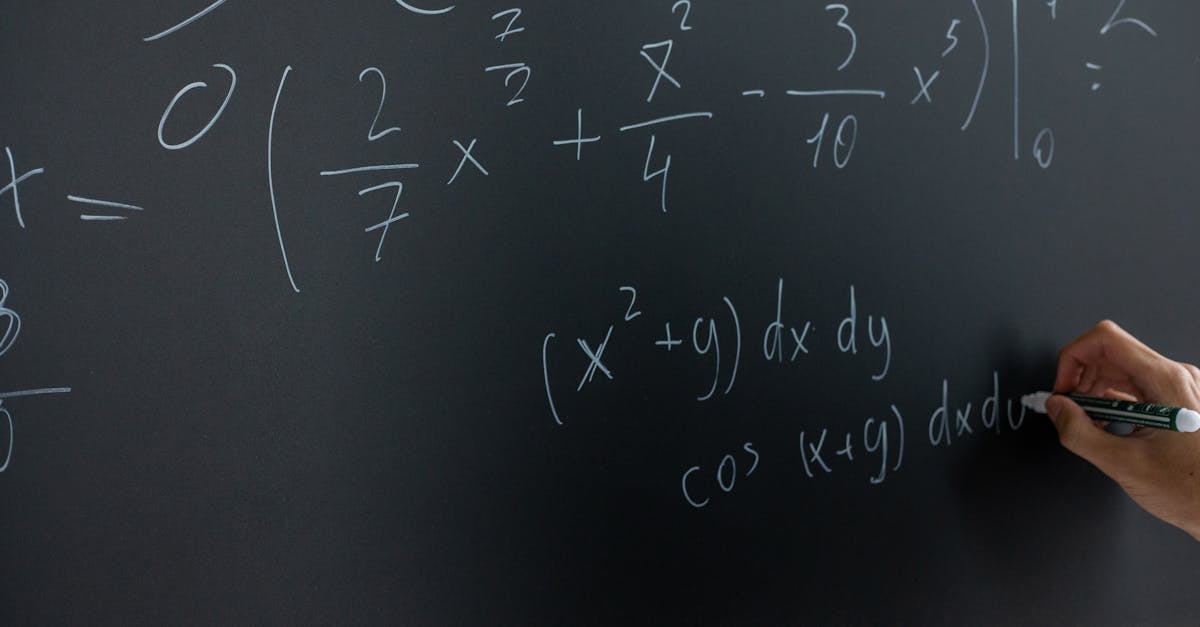
Mathematics has its own language—a system of symbols, notation, and terminology that has evolved over thousands of years from ancient Babylonian clay tablets to modern computer algebra systems. This symbolic language allows mathematicians to express complex ideas with extraordinary precision and brevity. What might take a paragraph of words can often be captured in a single equation. For students, professionals, and anyone who encounters mathematical notation in science, engineering, finance, or everyday life, understanding this symbolic vocabulary is essential. This guide covers the most important mathematical symbols and terms, organized from basic to advanced.
A Brief History of Mathematical Notation
Mathematical notation has undergone a remarkable evolution. Ancient civilizations expressed mathematical ideas entirely in words—a practice called "rhetorical algebra." The ancient Egyptians and Babylonians (circa 2000 BCE) used specialized symbols for numbers but described operations in prose.
The symbols we take for granted today are relatively recent inventions. The equals sign (=) was introduced by Robert Recorde in 1557. The plus (+) and minus (−) signs appeared in print in the late 15th century. The multiplication sign (×) was proposed by William Oughtred in 1631, and the division sign (÷) by Johann Rahn in 1659. The modern notation for variables (x, y, z) was standardized by René Descartes in 1637.
This symbolic revolution transformed mathematics from a verbal, difficult-to-share discipline into a universal written language. Today, a mathematical expression written in Tokyo, São Paulo, or Lagos means exactly the same thing—mathematical notation is arguably humanity's most universal language.
Basic Arithmetic Symbols
| Symbol | Name | Meaning | Example |
|---|---|---|---|
| + | Plus / Addition | Adds two quantities | 3 + 4 = 7 |
| − | Minus / Subtraction | Subtracts one quantity from another | 7 − 3 = 4 |
| × or · | Times / Multiplication | Multiplies quantities | 3 × 4 = 12 |
| ÷ or / | Divided by / Division | Divides one quantity by another | 12 ÷ 3 = 4 |
| = | Equals | Two expressions have the same value | 2 + 2 = 4 |
| % | Percent | Parts per hundred | 50% = 0.5 |
| √ | Square root | A number that when multiplied by itself gives the original | √16 = 4 |
| ^ or superscript | Exponent / Power | Repeated multiplication | 2³ = 8 |
| ! | Factorial | Product of all positive integers up to n | 5! = 120 |
| |x| | Absolute value | Distance from zero (always positive) | |−5| = 5 |
Comparison and Equality Symbols
| Symbol | Name | Read As |
|---|---|---|
| = | Equals | "is equal to" |
| ≠ | Not equal to | "is not equal to" |
| < | Less than | "is less than" |
| > | Greater than | "is greater than" |
| ≤ | Less than or equal to | "is less than or equal to" |
| ≥ | Greater than or equal to | "is greater than or equal to" |
| ≈ | Approximately equal to | "is approximately equal to" |
| ≡ | Identical to / Congruent | "is identical to" or "is congruent to" |
| ∝ | Proportional to | "is proportional to" |
Algebraic Terms and Symbols
Key Vocabulary
Variable — a symbol (usually a letter) representing an unknown value: x, y, z
Constant — a fixed value that doesn't change: π, e, 7
Coefficient — the number multiplied by a variable: in 3x, the coefficient is 3
Expression — a combination of numbers, variables, and operations: 2x + 5
Equation — a statement that two expressions are equal: 2x + 5 = 11
Inequality — a statement comparing two expressions: 2x + 5 > 11
Polynomial — an expression with multiple terms: x³ + 2x² − 5x + 3
Function — a rule that assigns each input exactly one output: f(x) = x²
Domain — the set of all possible input values for a function
Range — the set of all possible output values of a function
Constant — a fixed value that doesn't change: π, e, 7
Coefficient — the number multiplied by a variable: in 3x, the coefficient is 3
Expression — a combination of numbers, variables, and operations: 2x + 5
Equation — a statement that two expressions are equal: 2x + 5 = 11
Inequality — a statement comparing two expressions: 2x + 5 > 11
Polynomial — an expression with multiple terms: x³ + 2x² − 5x + 3
Function — a rule that assigns each input exactly one output: f(x) = x²
Domain — the set of all possible input values for a function
Range — the set of all possible output values of a function
Important Algebraic Symbols
| Symbol | Name | Meaning |
|---|---|---|
| ∑ | Sigma (summation) | Sum of a series of terms |
| ∏ | Pi (product) | Product of a series of terms |
| ∞ | Infinity | Without limit; endlessly large |
| f(x) | Function notation | The value of function f at input x |
| log | Logarithm | The inverse of exponentiation |
| ln | Natural logarithm | Logarithm base e |
Geometry Terms and Symbols
Point — a location with no dimension, represented by a dot
Line — straight path extending infinitely in both directions
Ray — a line with one endpoint extending infinitely in one direction
Angle — formed by two rays sharing a common endpoint (vertex); measured in degrees (°) or radians
Parallel (∥) — lines that never intersect
Perpendicular (⊥) — lines that intersect at a 90° angle
Congruent (≅) — same shape and size
Similar (~) — same shape but possibly different size
π (pi) — ratio of a circle's circumference to its diameter ≈ 3.14159
Line — straight path extending infinitely in both directions
Ray — a line with one endpoint extending infinitely in one direction
Angle — formed by two rays sharing a common endpoint (vertex); measured in degrees (°) or radians
Parallel (∥) — lines that never intersect
Perpendicular (⊥) — lines that intersect at a 90° angle
Congruent (≅) — same shape and size
Similar (~) — same shape but possibly different size
π (pi) — ratio of a circle's circumference to its diameter ≈ 3.14159
Key Geometric Formulas Vocabulary
Perimeter (L. per + metrum = around + measure) — total distance around a shape. Area (L. area = level ground) — the space enclosed by a two-dimensional shape. Volume (L. volumen = roll/scroll) — the space enclosed by a three-dimensional shape. Circumference (L. circum + ferre = around + carry) — the perimeter of a circle.
Set Theory Symbols
| Symbol | Name | Meaning |
|---|---|---|
| { } | Set brackets | Enclose the elements of a set: {1, 2, 3} |
| ∈ | Element of | x ∈ A means "x is in set A" |
| ∉ | Not element of | x ∉ A means "x is not in set A" |
| ∪ | Union | All elements in either set |
| ∩ | Intersection | Elements common to both sets |
| ⊂ | Subset | All elements of A are also in B |
| ∅ | Empty set | A set with no elements |
Calculus Terms and Symbols
Limit (lim) — the value a function approaches as the input approaches some value
Derivative (f'(x) or dy/dx) — the rate of change of a function; the slope at a point
Integral (∫) — the accumulation of quantities; the area under a curve
Differential (dx, dy) — an infinitesimally small change in a variable
Continuous — a function with no breaks, jumps, or holes
Convergent — a series or sequence that approaches a finite limit
Divergent — a series or sequence that does not approach a finite limit
Derivative (f'(x) or dy/dx) — the rate of change of a function; the slope at a point
Integral (∫) — the accumulation of quantities; the area under a curve
Differential (dx, dy) — an infinitesimally small change in a variable
Continuous — a function with no breaks, jumps, or holes
Convergent — a series or sequence that approaches a finite limit
Divergent — a series or sequence that does not approach a finite limit
Statistics and Probability
| Symbol/Term | Meaning |
|---|---|
| x̄ (x-bar) | The arithmetic mean (average) of a sample |
| μ (mu) | The population mean |
| σ (sigma) | Standard deviation (population) |
| s | Standard deviation (sample) |
| n | Sample size |
| P(A) | Probability of event A occurring |
| Median | The middle value when data is ordered |
| Mode | The most frequently occurring value |
| Variance | The average of squared deviations from the mean |
| Correlation | A measure of how two variables relate |
Greek Letters in Mathematics
Greek letters are used extensively in mathematics, each with conventional associations:
| Letter | Name | Common Use |
|---|---|---|
| α (alpha) | alpha | Angles, significance level |
| β (beta) | beta | Angles, beta function |
| γ (gamma) | gamma | Euler-Mascheroni constant, angles |
| δ, Δ (delta) | delta | Change in a value (Δx = change in x) |
| ε (epsilon) | epsilon | A very small positive number |
| θ (theta) | theta | Angles, especially in trigonometry |
| λ (lambda) | lambda | Eigenvalues, wavelength |
| μ (mu) | mu | Mean, micro- prefix |
| π (pi) | pi | Ratio of circumference to diameter ≈ 3.14159 |
| σ, Σ (sigma) | sigma | Standard deviation (σ), summation (Σ) |
| φ (phi) | phi | Golden ratio ≈ 1.618, angles |
| ω (omega) | omega | Angular velocity, last element |
Types of Numbers
Natural numbers (ℕ): 1, 2, 3, 4, ... (counting numbers)
Whole numbers: 0, 1, 2, 3, 4, ... (natural numbers plus zero)
Integers (ℤ): ..., −3, −2, −1, 0, 1, 2, 3, ... (from German "Zahlen" = numbers)
Rational numbers (ℚ): numbers expressible as a fraction p/q (from Latin "quotient")
Irrational numbers: numbers that cannot be expressed as fractions (π, √2, e)
Real numbers (ℝ): all rational and irrational numbers
Complex numbers (ℂ): numbers with a real and imaginary part (a + bi)
Prime numbers: numbers divisible only by 1 and themselves (2, 3, 5, 7, 11, ...)
Composite numbers: non-prime numbers greater than 1 (4, 6, 8, 9, 10, ...)
Whole numbers: 0, 1, 2, 3, 4, ... (natural numbers plus zero)
Integers (ℤ): ..., −3, −2, −1, 0, 1, 2, 3, ... (from German "Zahlen" = numbers)
Rational numbers (ℚ): numbers expressible as a fraction p/q (from Latin "quotient")
Irrational numbers: numbers that cannot be expressed as fractions (π, √2, e)
Real numbers (ℝ): all rational and irrational numbers
Complex numbers (ℂ): numbers with a real and imaginary part (a + bi)
Prime numbers: numbers divisible only by 1 and themselves (2, 3, 5, 7, 11, ...)
Composite numbers: non-prime numbers greater than 1 (4, 6, 8, 9, 10, ...)
How to Read Mathematical Expressions Aloud
Reading math aloud is an important skill for classroom communication and verbal problem-solving. Here are common conventions:
x² + 3x − 7 = 0 → "x squared plus three x minus seven equals zero"
f(x) = 2x + 1 → "f of x equals two x plus one"
∫₀¹ x² dx → "the integral from zero to one of x squared dx"
lim(x→∞) 1/x = 0 → "the limit as x approaches infinity of one over x equals zero"
∑ᵢ₌₁ⁿ i → "the sum from i equals one to n of i"
dy/dx → "dy dx" or "the derivative of y with respect to x"
A ∪ B → "A union B"
A ∩ B → "A intersect B" or "A intersection B"
f(x) = 2x + 1 → "f of x equals two x plus one"
∫₀¹ x² dx → "the integral from zero to one of x squared dx"
lim(x→∞) 1/x = 0 → "the limit as x approaches infinity of one over x equals zero"
∑ᵢ₌₁ⁿ i → "the sum from i equals one to n of i"
dy/dx → "dy dx" or "the derivative of y with respect to x"
A ∪ B → "A union B"
A ∩ B → "A intersect B" or "A intersection B"
Mathematical symbols and terminology constitute one of humanity's most powerful intellectual tools—a precise, universal language for describing patterns, relationships, and structures. By learning this vocabulary, you gain access not just to mathematics itself but to the vast domains of science, engineering, economics, and technology that depend on mathematical expression. Every symbol tells a story of human ingenuity, and every term opens a door to deeper understanding.