
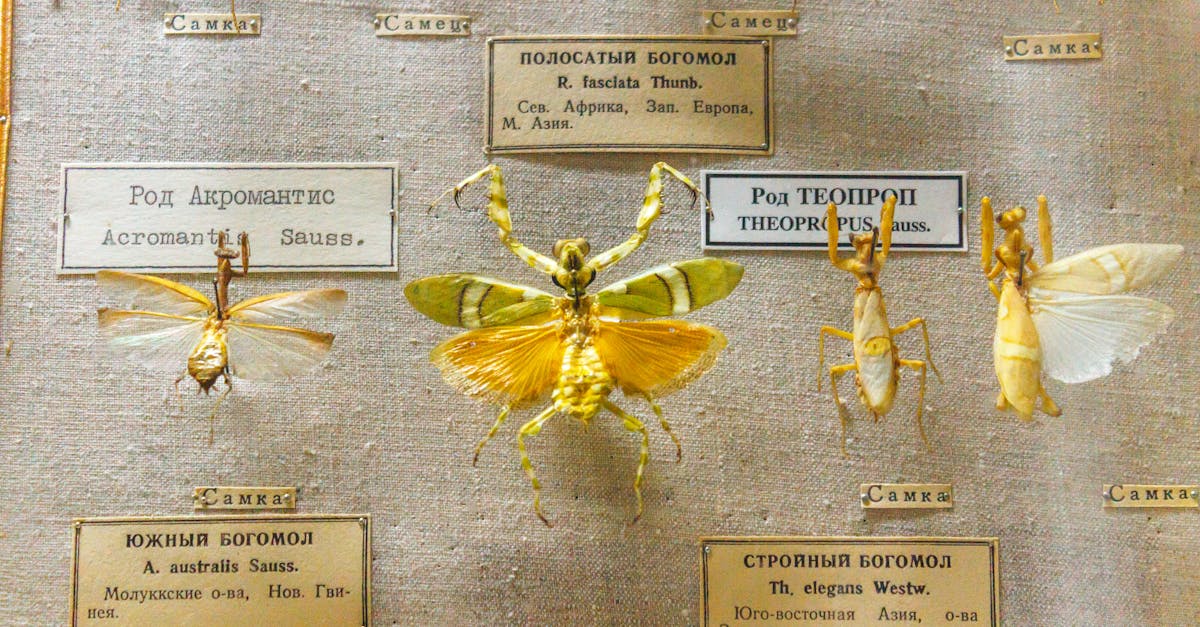
Behind every scientific name—from Homo sapiens to H₂O, from Sirius to streptococcus—lies a carefully designed system of nomenclature. Scientific naming is not arbitrary; it follows rules developed over centuries to ensure that every organism, chemical compound, celestial body, and geological formation can be identified precisely and unambiguously by researchers worldwide. These naming systems are among science's greatest practical achievements, enabling clear communication across languages, cultures, and centuries. Understanding how scientific naming works reveals the logic behind terms that might otherwise seem impenetrably complex.
Why Scientific Naming Matters
Common names for organisms and substances vary by language, region, and even community. The bird called a "robin" in Britain (Erithacus rubecula) is an entirely different species from the American "robin" (Turdus migratorius). The plant called "corn" in the United States is "maize" in much of the world, and "corn" in British English historically referred to any cereal grain. Without standardized scientific names, these ambiguities would make international scientific communication impossible.
Scientific nomenclature solves this problem by assigning each entity a unique, internationally recognized name governed by explicit rules. These rules ensure stability (names don't change arbitrarily), universality (the same name is used worldwide), and uniqueness (each entity has exactly one valid name).
The naming systems used in different scientific fields have evolved independently, each tailored to its domain's needs. Biological nomenclature uses binomial Latin names; chemical nomenclature uses systematic names based on molecular structure; astronomical nomenclature uses catalog numbers and approved proper names. Despite their differences, all share the core goal of enabling precise, unambiguous identification.
Biological Nomenclature
The Linnaean System
Carl Linnaeus, the 18th-century Swedish naturalist, revolutionized biology by introducing binomial nomenclature—a system that gives each species a two-part Latin name consisting of the genus (capitalized) and the specific epithet (lowercase), both italicized.
Homo sapiens — Humans (Homo = human, sapiens = wise)
Canis lupus familiaris — Domestic dog
Felis catus — Domestic cat
Panthera leo — Lion
Quercus robur — English oak
Rosa canina — Dog rose
Tyrannosaurus rex — T. rex (tyrant lizard king)
Escherichia coli — E. coli bacterium
Canis lupus familiaris — Domestic dog
Felis catus — Domestic cat
Panthera leo — Lion
Quercus robur — English oak
Rosa canina — Dog rose
Tyrannosaurus rex — T. rex (tyrant lizard king)
Escherichia coli — E. coli bacterium
The Taxonomic Hierarchy
Species are grouped into a nested hierarchy of increasingly inclusive categories. Using humans as an example:
| Rank | Name | Characteristics |
|---|---|---|
| Domain | Eukarya | Organisms with nucleated cells |
| Kingdom | Animalia | Multicellular animals |
| Phylum | Chordata | Animals with a notochord |
| Class | Mammalia | Warm-blooded, milk-producing |
| Order | Primates | Forward-facing eyes, grasping hands |
| Family | Hominidae | Great apes |
| Genus | Homo | Human-like primates |
| Species | H. sapiens | Modern humans |
Naming Rules
Biological naming is governed by international codes: the International Code of Zoological Nomenclature (ICZN) for animals, the International Code of Nomenclature for algae, fungi, and plants (ICN) for plants, and separate codes for bacteria and viruses. Key rules include: names must be Latin or Latinized, the first valid publication of a name has priority, and species names are always binomial.
Chemical Nomenclature
IUPAC Nomenclature
The International Union of Pure and Applied Chemistry (IUPAC) maintains the standard rules for naming chemical compounds. Unlike biological naming, which uses Latin names, chemical nomenclature aims to encode a compound's molecular structure directly in its name.
Simple inorganic compounds:
NaCl = sodium chloride (table salt)
H₂O = dihydrogen monoxide (water)
CO₂ = carbon dioxide
H₂SO₄ = sulfuric acid
Organic compounds:
CH₄ = methane (1 carbon)
C₂H₆ = ethane (2 carbons)
C₃H₈ = propane (3 carbons)
C₆H₁₂O₆ = glucose
NaCl = sodium chloride (table salt)
H₂O = dihydrogen monoxide (water)
CO₂ = carbon dioxide
H₂SO₄ = sulfuric acid
Organic compounds:
CH₄ = methane (1 carbon)
C₂H₆ = ethane (2 carbons)
C₃H₈ = propane (3 carbons)
C₆H₁₂O₆ = glucose
Element Naming
Chemical elements are named by their discoverers, subject to IUPAC approval. Names often derive from Latin (aurum → Au, gold), Greek (helios → helium), places (francium from France, americium from America), scientists (curium after Marie Curie, einsteinium after Einstein), or properties (chlorine from Greek chloros, meaning green).
Astronomical Nomenclature
The International Astronomical Union (IAU) is the sole authority for naming celestial objects. Different types of objects follow different conventions.
Stars
Bright stars have traditional proper names, mostly Arabic (Aldebaran, Betelgeuse, Rigel) or Greek/Latin (Polaris, Sirius, Vega). The Bayer designation system uses a Greek letter followed by the genitive form of the constellation name: Alpha Centauri, Beta Orionis.
Planets and Moons
Planets in our solar system bear the names of Roman gods (Mercury, Venus, Mars, Jupiter, Saturn) except for Earth (Germanic) and Uranus (Greek). Moons are named thematically: Jupiter's large moons bear names from Greek mythology (Io, Europa, Ganymede, Callisto), while Uranus's moons are named after Shakespearean characters (Oberon, Titania, Ariel).
Asteroids and Comets
Asteroids receive a number and name upon confirmation of their orbit (e.g., 1 Ceres, 433 Eros). Comets are named after their discoverers (Halley's Comet, Hale-Bopp).
Geological and Mineral Naming
Geological time periods are named after places (Jurassic from the Jura Mountains, Devonian from Devon, Cambrian from Cambria/Wales) or characteristics (Carboniferous = coal-bearing, Cretaceous from Latin creta = chalk).
Minerals are named by the International Mineralogical Association, typically after discoverers, localities, chemical composition, or physical properties. Examples: feldspar (from German "field-spar"), quartz (from German, possibly from Slavic "hard"), calcite (from Latin calx = lime).
Medical and Anatomical Naming
Medical naming draws from both Latin and Greek, with specific conventions for different types of terms. Diseases may be named after their discoverer (Parkinson's disease, Alzheimer's disease), their symptoms (diabetes mellitus = "sweet siphon"), their affected body part (hepatitis = liver inflammation), or their cause (streptococcal infection).
Anatomical terminology follows the Terminologia Anatomica, an international standard that uses Latin names for all body structures. Every muscle, bone, nerve, and blood vessel has a standardized Latin name used worldwide.
Common Roots in Scientific Names
| Root | Origin | Meaning | Examples |
|---|---|---|---|
| -phyll | Greek phyllon | leaf | chlorophyll, phyllotaxis |
| -morph | Greek morphe | form, shape | morphology, polymorphic |
| -gen | Greek genos | birth, origin | oxygen, hydrogen, pathogen |
| -cyte | Greek kytos | cell | leukocyte, erythrocyte |
| -saurus | Greek sauros | lizard | dinosaur, Tyrannosaurus |
| -ology | Greek logos | study of | biology, geology, zoology |
| aqua- | Latin | water | aquatic, aquifer, aquarium |
| stella-/astro- | Latin/Greek | star | constellation, astronomy |
| terra-/geo- | Latin/Greek | earth | terrestrial, geography |
Pronouncing Scientific Names
Scientific names are typically pronounced using anglicized Latin pronunciation. There is no single "correct" pronunciation for most scientific names—even professional scientists disagree on how to say many terms. General guidelines include: pronounce every vowel, stress the penultimate (second-to-last) syllable if it is long, and use English approximations of Latin sounds.
Tyrannosaurus — tih-RAN-oh-SORE-us
Escherichia — esh-er-IK-ee-uh
Quercus — KWER-kus
Chrysanthemum — krih-SAN-theh-mum
Escherichia — esh-er-IK-ee-uh
Quercus — KWER-kus
Chrysanthemum — krih-SAN-theh-mum
Creative and Unusual Scientific Names
Scientists occasionally have fun with nomenclature. Some memorable examples: Ninjemys (a turtle named after the Teenage Mutant Ninja Turtles), Spongiforma squarepantsii (a fungus named after SpongeBob), Ba humbugi (a snail with a Scrooge reference), Pieza pi (a fly), and Agra vation (a beetle). While playful, these names still follow official nomenclatural rules.
Scientific nomenclature is one of humanity's great collaborative achievements—a system that allows researchers across every nation and language to communicate precisely about the natural world. Understanding how these names work demystifies science and reveals the human creativity embedded in even the most technical-sounding terminology.