
Table of Contents
Introduction to Scrabble Vocabulary
Scrabble is a game where vocabulary is power. While strategy, tile management, and board awareness all matter, the foundation of competitive Scrabble is word knowledge. The more valid words you know—especially unusual short words, high-value letter words, and seven-letter "bingo" words—the more options you have on every turn and the higher your scores will be.
But Scrabble vocabulary is a peculiar thing. It includes many words that even well-read English speakers have never encountered: obscure two-letter words borrowed from other languages, archaic terms preserved in dictionaries but absent from modern usage, and technical terminology from specialized fields. Competitive Scrabble players study these words the way chess players study openings—not necessarily understanding their meanings in depth, but knowing they exist and are valid plays. This guide will equip you with the essential Scrabble vocabulary and strategies to elevate your game.
Official Scrabble Dictionaries
One of the most important things for any Scrabble player to understand is which dictionary governs their game. There are two main official Scrabble word lists used worldwide:
TWL (Tournament Word List) — North America
Used in official Scrabble tournaments in the United States, Canada, Israel, and Thailand. The TWL is based on the Merriam-Webster Official Scrabble Players Dictionary (OSPD) and contains approximately 187,000 valid words. The retail consumer version (OSPD) removes potentially offensive words, while the tournament version (TWL/OWL) includes them. The list is updated periodically to add new words and remove obsolete ones.
SOWPODS (Collins Scrabble Words) — International
Used in official Scrabble tournaments everywhere else in the world, SOWPODS combines the North American TWL with the word list from Collins English Dictionary (formerly Chambers Dictionary). SOWPODS contains approximately 280,000 valid words—significantly more than TWL. Many words valid in SOWPODS are not valid in TWL, and vice versa, which means international players have a larger vocabulary pool to draw from.
For casual home games, any agreed-upon dictionary can serve as the authority. Many casual players use an online dictionary to adjudicate challenges. The key is that all players agree on the reference before the game begins.
Tile Values and Letter Distribution
Understanding tile values is essential for maximizing your score. The standard English Scrabble set contains 100 tiles with the following point values:
| Points | Letters |
|---|---|
| 0 | Blank (×2) |
| 1 | A(×9), E(×12), I(×9), O(×8), U(×4), L(×4), N(×6), S(×4), T(×6), R(×6) |
| 2 | D(×4), G(×3) |
| 3 | B(×2), C(×2), M(×2), P(×2) |
| 4 | F(×2), H(×2), V(×2), W(×2), Y(×2) |
| 5 | K(×1) |
| 8 | J(×1), X(×1) |
| 10 | Q(×1), Z(×1) |
The high-value tiles (J, X, Q, Z) are worth memorizing special words for, because playing them on premium squares can generate enormous scores. Equally important, knowing how to use low-value common tiles efficiently—especially the nine E tiles—prevents you from getting stuck with an unplayable rack.
Essential Two-Letter Words
Two-letter words are the secret weapons of competitive Scrabble. They allow you to play parallel to existing words, creating multiple words in a single turn and dramatically increasing your score. There are approximately 107 valid two-letter words in the TWL. Here are the most important ones to know:
- Common: AA, AB, AD, AE, AG, AH, AI, AL, AM, AN, AR, AS, AT, AW, AX, AY
- High-value: JO (a Scottish sweetheart), QI (Chinese life force), XI (Greek letter), XU (Vietnamese currency), ZA (pizza, informal)
- Often overlooked: BI, BO, DE, ED, EF, EL, EM, EN, ER, ES, ET, EX, FA, FE, GI, GO, HA, HE, HI, HM, HO
- Unusual but valid: KA (Egyptian spirit), KI (variant of chi/qi), MU, NU, OE (Faroe Islands wind), SH, TA, UT (musical note)
Memorizing all valid two-letter words is the single most impactful thing you can do to improve your Scrabble game. These tiny words open up vast strategic possibilities on the board.
High-Scoring Words to Memorize
Certain words are particularly valuable because they use high-point tiles effectively:
J Words
- JO (2 letters, 9 points) — Scottish word for sweetheart
- JAB, JAG, JAM, JAR, JAW, JAY — common three-letter J words
- JEEZ, JIVE, JINX, JIVY, JOKY, JURY — useful four- and five-letter words
X Words
- XI, XU — essential two-letter X words
- AX, EX, OX — common two-letter words ending in X
- APEX, AXLE, EXAM, EXPO, FLUX, JINX, LUXE, ONYX — versatile X words
- OXID, OXIM, OXES — less obvious but useful X plays
Z Words
- ZA — the two-letter Z word (slang for pizza)
- ZAG, ZAP, ZED, ZEE, ZEN, ZEP, ZIG, ZIN, ZIP, ZIT — short Z words
- ADZE, AZAN, FIZZ, FUZZ, JAZZ, ZING, ZONE, ZOOM — versatile longer Z words
Q Without U Words
Drawing the Q tile without a U to accompany it is one of the most dreaded situations in Scrabble. Fortunately, several valid words use Q without U. These are essential to memorize:
- QI — the vital life force in Chinese philosophy (the single most important Q-without-U word)
- QADI — an Islamic judge
- QANAT — an irrigation tunnel
- QAT — a plant chewed as a stimulant
- QOPH — a Hebrew letter
- QINTAR — Albanian monetary unit
- QINDAR — variant of qintar
- QWERTY — keyboard layout (valid in SOWPODS, not TWL)
- TRANQ — short for tranquilizer
Knowing these words transforms the Q from a liability into an opportunity. QI alone, played on a Triple Letter Score square, is worth 62 points—a game-changing play from just two tiles. Understanding the origins of these words also helps you remember them.
Seven-Letter Bingos
In Scrabble, playing all seven tiles from your rack in a single turn earns a 50-point bonus called a "bingo." Bingos are the most dramatic and impactful plays in the game, often scoring 70-100+ points. Competitive players study common seven- and eight-letter words (eight letters because you typically play seven tiles plus one already on the board) extensively.
Some of the most common bingo words include:
- SATIRE, RETAIN, RETINA — anagrams of the common letter combination AEINRT
- STEARIN, NASTIER, ANTSIER — from AEINRST, one of the most bingo-friendly racks
- ENTRIES, ENTIRES, TRIENES — from EEINRST
- ELATION, TOENAIL — from AEILNOT
- STONIER, ORIENTS, NORITES — from EINORST
Learning to recognize "bingo-prone" letter combinations on your rack—groups of letters that can form seven-letter words—is a skill that separates casual players from competitive ones. The most bingo-friendly tiles are the common one-point letters: A, E, I, N, R, S, T.
Strategic Vocabulary Tips
Beyond memorizing word lists, strategic vocabulary use involves several key principles:
- Learn hooks. A "hook" is a single letter that can be added to the front or back of an existing word to form a new word. For example, knowing that "HOST" can become "GHOST" (front hook) or "HOSTS" (back hook) creates scoring opportunities. S, D, R, and E are the most common back hooks.
- Know your -ING, -TION, -ED endings. These common suffixes help you build longer words from shorter bases, approaching bingo territory.
- Study anagram patterns. Many tournament players study "alphagrams" (letter sets arranged alphabetically) and their corresponding words, training themselves to spot playable words in any combination of tiles.
- Balance your rack. Aim for a roughly even mix of vowels and consonants. Dump excess vowels or consonants strategically rather than holding them for a "perfect" play that may never come.
- Control the board. Sometimes the best strategic play isn't the highest-scoring one. Playing defensively—avoiding opening triple-word-score lanes for your opponent—can be as important as maximizing your own points.
Building Your Scrabble Word Knowledge
Serious Scrabble players use several methods to build their word knowledge:
- Flashcard apps: Zyzzyva and other Scrabble-specific study tools present random letter combinations and test whether you can find valid words.
- Word lists by probability: Study words containing the most common letter combinations first, as these are the words you're most likely to need.
- Post-game analysis: After each game, look up words your opponent played that you didn't know, and explore what words you could have played with the tiles you had.
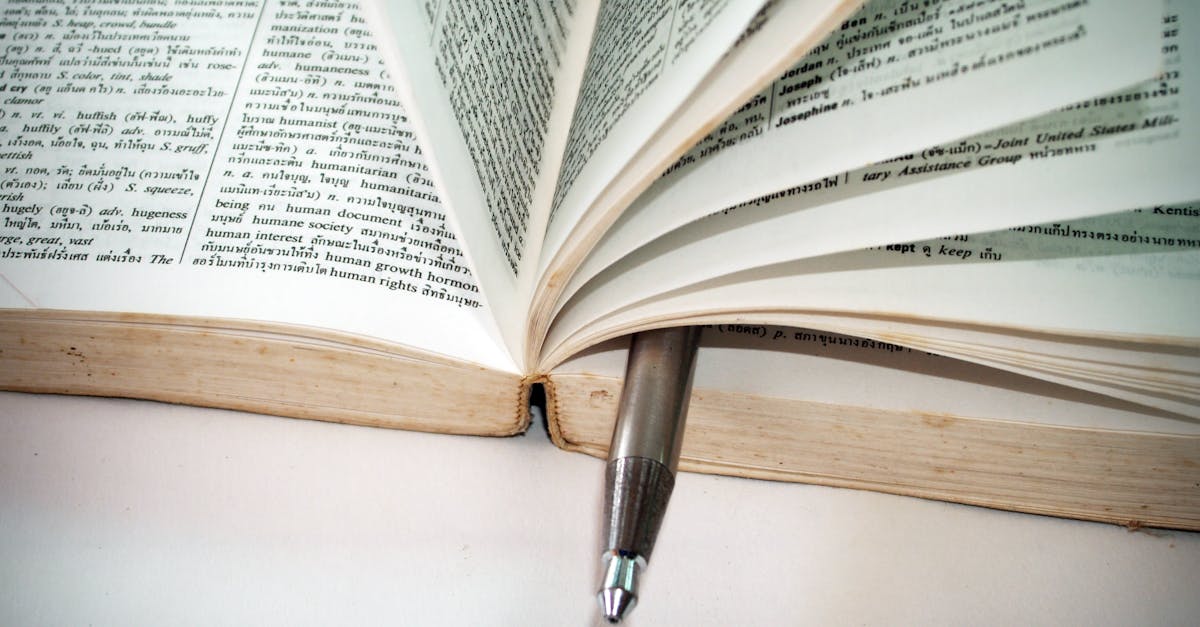
- Dictionary browsing: Regularly browsing a dictionary exposes you to words you might never encounter otherwise, building the broad vocabulary base that competitive Scrabble demands.
Scrabble and Vocabulary Building
While competitive Scrabble focuses on memorizing valid letter combinations, the game also serves as a powerful vocabulary builder. Many Scrabble players report that the game has dramatically expanded their knowledge of English words, from obscure but legitimate terms to the kind of everyday vocabulary that enriches daily communication.
The connection between word games and vocabulary growth is well-documented. Scrabble, in particular, rewards a deep and broad knowledge of English word formation patterns—understanding how prefixes, suffixes, and roots combine to create words. This structural understanding transfers to reading comprehension, writing, and verbal communication, making Scrabble not just a game but a genuinely educational pursuit.