 Dictionary Wiki
Anatomical Terminology: Body Part Names Explained
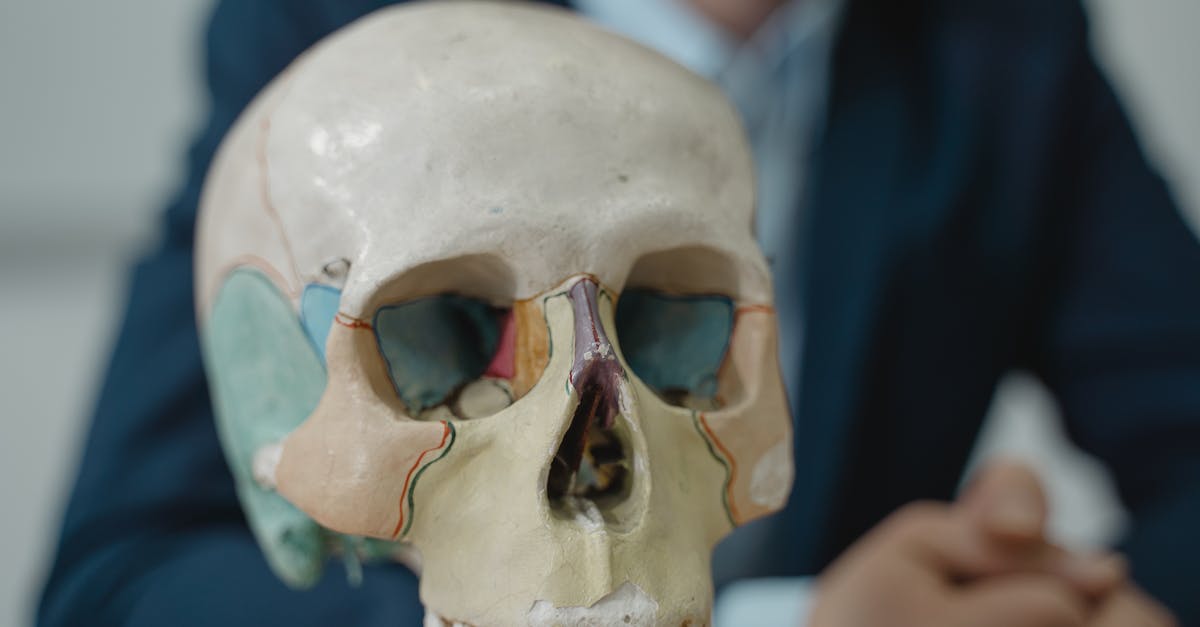
If you have ever read a discharge summary and felt locked out of your own medical record, the culprit is usually vocabulary. Clinicians do not describe the body in everyday English because everyday English is too sloppy for medicine. "Above the knee" can mean several different things; distal femur cannot. Built from Latin and Greek roots and polished over centuries, anatomical terminology is a global shared shorthand — a surgeon in Seoul, a radiographer in Oslo, and a paramedic in São Paulo all mean the same thing by lateral malleolus. This guide walks through the core vocabulary that makes that possible.
The Standard Reference Pose
Every anatomical description assumes the patient is in a single, agreed-upon stance called the anatomical position: upright, face forward, arms relaxed at the sides with the palms turned outward, legs straight, feet pointing ahead. Treat it as the default coordinate system. "Left" and "right" are always the patient's left and right, never the examiner's.
The convention matters because bodies move. A trauma patient might arrive prone; a surgical patient might be lateral on the table; an X-ray might be taken with the arm raised overhead. None of that changes how you describe a structure. "The lesion is on the medial aspect of the left thigh" means the same thing whether the patient is standing, lying, or hanging upside down from a harness.
Words for Direction
| Term | Meaning | Opposite | Example |
|---|---|---|---|
| Superior | Toward the head / upper | Inferior | The shoulders are superior to the hips |
| Inferior | Away from the head / lower | Superior | The knees are inferior to the pelvis |
| Anterior (ventral) | Toward the front | Posterior | The kneecap is anterior to the hamstrings |
| Posterior (dorsal) | Toward the back | Anterior | The shoulder blades are posterior to the ribs |
| Medial | Toward the midline | Lateral | The big toe is medial to the little toe |
| Lateral | Away from the midline | Medial | The thumb, in anatomical position, is lateral to the pinky |
| Proximal | Closer to the trunk | Distal | The shoulder is proximal to the fingertips |
| Distal | Farther from the trunk | Proximal | The ankle is distal to the knee |
| Superficial | Closer to the surface | Deep | A paper cut stays superficial |
| Deep | Farther from the surface | Superficial | The femur sits deep to the quadriceps |
Planes and How the Body Gets Sliced
Frontal (coronal) plane — another vertical cut, but perpendicular to the sagittal, separating front from back (L. corona = crown).
Transverse (horizontal) plane — a flat, belt-like cut through the body, giving an upper and a lower half.
Oblique plane — any slice that does not match one of the three standard axes.
Imaging equipment is built around these planes. Conventional CT slices are transverse; many MRI sequences are acquired sagittally or coronally and then re-rendered in other orientations. A neuroradiologist describing a lesion will specify the plane the image was captured in so the surgeon can reconstruct the geometry.
Bones and the Skeleton
Major Bones
| Common Name | Anatomical Name | Etymology |
|---|---|---|
| Skull | Cranium | Gk. kranion (skull) |
| Jawbone | Mandible | L. mandibula (jaw) |
| Collarbone | Clavicle | L. clavicula (little key) |
| Shoulder blade | Scapula | L. scapula (shoulder blade) |
| Breastbone | Sternum | Gk. sternon (chest) |
| Upper arm bone | Humerus | L. humerus (shoulder) |
| Forearm bones | Radius and Ulna | L. radius (ray), ulna (elbow) |
| Thigh bone | Femur | L. femur (thigh) |
| Shinbone | Tibia | L. tibia (flute/shinbone) |
| Kneecap | Patella | L. patella (small dish) |
| Finger/toe bones | Phalanges | Gk. phalanx (line of soldiers) |
| Backbone | Vertebral column | L. vertebra (joint, turning) |
Naming the Muscles
Muscle names are miniature descriptions. Once you know which feature the namer picked up on — shape, spot on the body, relative size, action, or the number of tendinous heads — a long Latin label becomes a sentence.
By location: Intercostals live between the ribs, Temporalis sits over the temple, Tibialis anterior runs down the front of the shin.
By size: The gluteal group includes a maximus, a medius, and a minimus — named for the biggest, middle, and smallest of the three.
By action: Flexors bend joints, extensors straighten them, adductors pull limbs toward the midline, abductors swing them away.
By number of heads: Biceps (two origins), triceps (three), quadriceps (four).
The Body's Organ Systems
| System | Latin/Greek Root | Key Organs |
|---|---|---|
| Cardiovascular | kardia (heart) + vasculum (vessel) | Heart, arteries, veins, capillaries |
| Respiratory | respirare (to breathe) | Lungs, trachea, bronchi, diaphragm |
| Digestive (GI) | digerere (to dissolve) | Esophagus, stomach, intestines, liver |
| Nervous | nervus (sinew) | Brain, spinal cord, nerves |
| Endocrine | endo (within) + krinein (to separate) | Thyroid, pituitary, adrenal glands |
| Urinary/Renal | ren (kidney) + urina | Kidneys, ureters, bladder, urethra |
| Integumentary | integumentum (covering) | Skin, hair, nails |
| Lymphatic/Immune | lympha (water) | Lymph nodes, spleen, thymus |
Names for Regions of the Body
Cervical — the neck (L. cervix = neck).
Thoracic — the chest (Gk. thorax = breastplate, what a hoplite wore).
Abdominal — the belly (L. abdomen).
Lumbar — the lower back (L. lumbus = loin).
Pelvic — the hip basin (L. pelvis = basin).
Brachial — the upper arm (L. brachium).
Femoral — the thigh (L. femur).
Popliteal — the hollow behind the knee (L. poples).
Plantar — the sole of the foot (L. planta).
Palmar — the palm side of the hand (L. palma).
Assembling Medical Terms from Parts
Most anatomical vocabulary is modular. A root names the structure, a prefix modifies it, and a suffix says what is happening to it. Learn twenty or so roots and you can parse thousands of terms without reaching for a reference.
| Component | Meaning | Example |
|---|---|---|
| cardi/o | heart | cardiology, pericardium |
| oste/o | bone | osteoporosis, osteoblast |
| my/o | muscle | myocardium, myalgia |
| arthr/o | joint | arthritis, arthroscopy |
| neur/o | nerve | neurology, neuropathy |
| derm/o | skin | dermatology, epidermis |
| hem/o, hemat/o | blood | hemorrhage, hematoma |
| pneum/o | lung/air | pneumonia, pneumothorax |
| enter/o | intestine | enteritis, gastroenterology |
| cephal/o | head | cephalic, encephalitis |
Anatomy That Leaked into Ordinary Speech
A surprising amount of anatomical Latin has slipped into casual English. "Muscle" descends from Latin musculus, literally "little mouse" — Roman observers thought a flexed bicep rippling under the skin looked like a small animal darting past. "Nerve" comes from nervus, originally a tendon or bowstring. "Digit" kept its Roman meaning of finger or toe even as it acquired its numerical sense (we still count on our fingers). "Pupil" borrows from pupilla, "little doll," because the miniature reflection of another person stares back at you from that black spot.
Strip away the mystique and anatomical vocabulary becomes a practical code. Each term packs in a location, a shape, or a function, and once you see the seams you can take almost any term apart. That skill pays off long after the exam — it makes conversations with clinicians clearer, turns medical records into readable documents, and gives you a steadier sense of what the body is actually doing when something goes wrong.