 Dictionary Wiki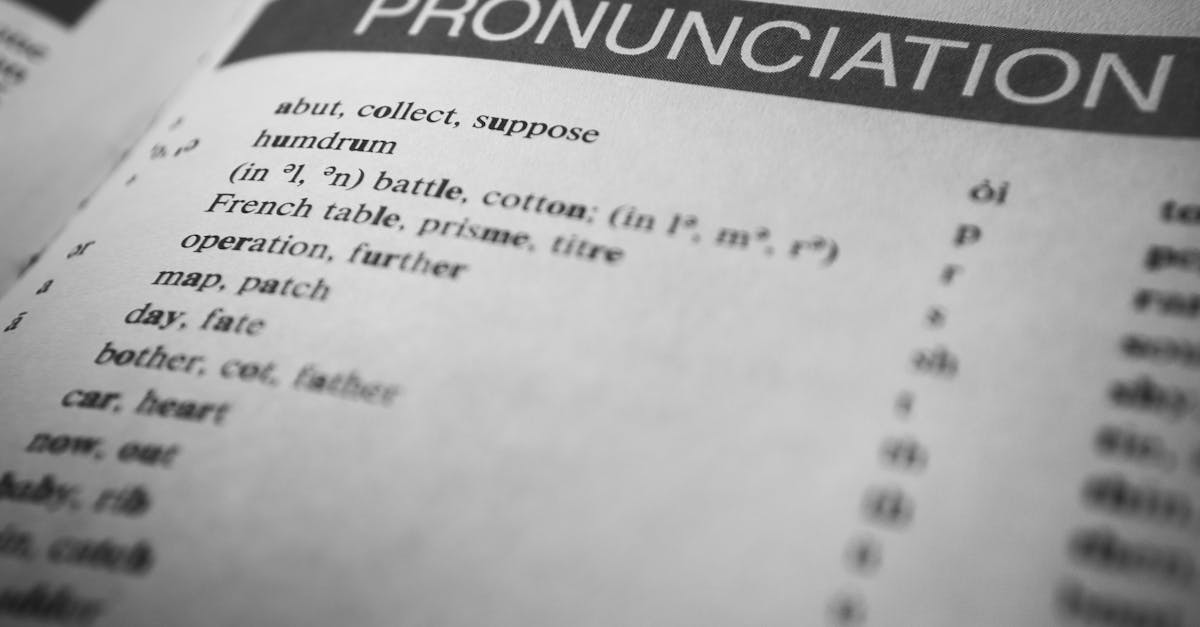
Getting Oriented
A dictionary is not just one kind of reference book. Some explain words in the same language, some translate between languages, some show pronunciation, and others help you find a word when all you have is a vague idea. The best dictionary for a poet is not always the best one for a lawyer, a beginner learning English, or a researcher reading a seventeenth-century text.
The history of dictionaries shows how simple lists of words gradually expanded into many specialized tools. Modern lexicographers create dictionaries for different users and tasks, each with its own structure and level of detail. This guide walks through the main types of dictionaries you are most likely to meet and explains what each one does best.
Single-Language Dictionaries
A monolingual dictionary gives meanings in the same language as the headwords. In an English monolingual dictionary, English words are explained with English definitions. This is the type many people mean when they simply say "dictionary."
Monolingual dictionaries are usually grouped by size and depth:
- Concise or pocket dictionaries include under 50,000 entries and concentrate on core vocabulary. They leave out some detail, but they are convenient for quick checks and easy to carry.
- College or desk dictionaries are abridged references with roughly 50,000–200,000 entries. Merriam-Webster's Collegiate Dictionary and the Oxford Dictionary of English are examples. They offer a practical middle ground between coverage and usability, which is why they are so common.
- Unabridged dictionaries try to cover the language as fully as possible, often with 250,000 or more entries. Webster's Third New International Dictionary and the Oxford English Dictionary belong here. They are invaluable for serious research, though they are usually too large and costly for ordinary daily use.
Knowing what a dictionary is and how to use one well begins with choosing a format that matches the question you are asking.
Two-Language and Multi-Language Dictionaries
Bilingual dictionaries connect two languages by giving equivalents from one to the other. A French-English dictionary, for instance, may list French words with English translations and English words with French translations. This type has very old roots: the Sumerian-Akkadian word lists of the ancient world were, in effect, bilingual dictionaries.
Strong bilingual dictionaries are hard to make because languages do not line up word for word. The Japanese word wabi-sabi and the German word Schadenfreude cannot be replaced neatly by one ordinary English word. A useful bilingual entry may need several translations, short explanations, and examples that show which choice fits which setting. The problem of untranslatable words is one of the most interesting challenges in bilingual lexicography.
Multilingual dictionaries deal with three or more languages. They are rarer because coordinating many languages in one reference is highly complex, but they are useful in subject areas where international terminology needs to be standardized.
Dictionaries Made for Language Learners
Learner's dictionaries are written for people studying a language as a second or foreign language. They look like monolingual dictionaries at first glance, but their entries are shaped around the needs of non-native speakers.
- Frequency information: Many learner's dictionaries mark how common a word is, so students can focus on the most common English words first.
- More example sentences: Learners need to see words in natural settings, so these dictionaries usually provide more examples than standard dictionaries.
- Cultural and usage notes: Entries often explain politeness, idiom, formal vs. informal registers, and other context-sensitive issues.
- Controlled defining vocabulary: Definitions are written with a limited pool of common words, often around 2,000–3,000, so learners do not have to look up several more words just to understand one definition.
- Detailed grammatical information: They commonly identify verb patterns, countable and uncountable nouns, adjective placement, and other points that learners need to use a word correctly.
Major English learner's dictionaries include the Oxford Advanced Learner's Dictionary (OALD), the Longman Dictionary of Contemporary English (LDOCE), the Cambridge Advanced Learner's Dictionary (CALD), and the Collins COBUILD Advanced Learner's Dictionary.
Dictionaries That Track Words Through Time
Historical dictionaries show how words have developed across time. They record early appearances, changes in meaning, and dated quotations that illustrate each stage. A standard dictionary mainly tells you how a word is used now; a historical dictionary explains how that word got there.
The Oxford English Dictionary is the leading historical dictionary of English. Its entries include dated citations—real quotations from published sources—placed in chronological order. That arrangement lets readers follow a word from its earliest known use through later changes, which is especially helpful when studying words that changed meaning.
Historical dictionaries are especially useful for scholars of the history of the English language, literary researchers working with older texts, and curious readers who want to see a word's biography rather than only its current definition.
Dictionaries of Word Origins
Etymological dictionaries concentrate on word origins and historical development. Many general dictionaries include a short origin note, but etymological dictionaries give a fuller account of where a word came from, which languages it passed through, and how its form and meaning shifted.
A thorough etymological entry may trace a word to an early reconstructed form, list related forms in other languages, explain sound changes, and identify cognates. For instance, an entry for "mother" would connect it with Latin mater, Greek mēter, Sanskrit mātár, and German Mutter, all from a shared Proto-Indo-European source.
Important etymological references include the Oxford Dictionary of English Etymology, the Chambers Dictionary of Etymology, and Douglas Harper's online Etymonline. These works show how English vocabulary has been shaped by Latin, Greek, French, Norse, and many other languages.
Subject-Specific and Technical References
Specialized dictionaries cover the language of a particular field, profession, art, or academic subject. They can define technical terms with a precision that a general dictionary usually cannot provide.
Common examples include:
- Legal dictionaries: Black's Law Dictionary, Oxford Dictionary of Law
- Medical dictionaries: Stedman's Medical Dictionary, Dorland's Illustrated Medical Dictionary
- Music dictionaries: The New Grove Dictionary of Music and Musicians
- Computing dictionaries: Oxford Dictionary of Computing, along with many online technology glossaries
- Philosophical dictionaries: Oxford Dictionary of Philosophy
- Scientific dictionaries: Oxford Dictionary of Chemistry, McGraw-Hill Dictionary of Scientific and Technical Terms
Professionals and students rely on these references when exact terminology matters. A general dictionary might gloss "tort" as "a wrongful act." A legal dictionary can go much further, explaining categories of torts, legal consequences, and connections to relevant case law.
Thesauruses and Word-Choice Guides
A thesaurus groups words by meaning instead of defining each word in the usual way. It helps users find synonyms, antonyms, and related expressions. Although a thesaurus is not exactly the same thing as a dictionary, the two tools work well together.
Most thesauruses follow one of two formats:
- Alphabetical thesauruses arrange headwords from A to Z, then place synonyms and antonyms under each one. This layout is fast and familiar, though it does not encourage as much broad conceptual browsing.
- Classified thesauruses sort words into meaning-based categories that move from general ideas to more specific ones. Roget's Thesaurus follows this model, organizing concepts under six large classes: Abstract Relations, Space, Matter, Intellect, Volition, and Affections, with many smaller divisions.
Understanding the difference between a dictionary and a thesaurus helps you decide whether you need a definition, a clearer distinction, or a better word choice.
Dictionaries for Rhymes
Rhyming dictionaries arrange words by ending sounds. Poets, lyricists, and songwriters use them to find words that share a rhyme quickly. Words such as "stone," "known," "throne," "shown," "grown," and "alone" would be grouped because their final sounds match.
Better rhyming dictionaries separate perfect rhymes, near rhymes or slant rhymes, and sight rhymes. A sight rhyme is a pair of words that look as if they might rhyme but do not, such as "bough" and "rough." Some rhyming dictionaries also sort results by syllable count, which is useful when a line has to fit a particular meter.
Picture-Based and Visual Dictionaries
Visual dictionaries use labeled images, drawings, or photographs instead of relying mainly on written definitions. They show the object or part being named. A page on a bicycle, for example, might label the chain, spokes, pedals, handlebars, saddle, and frame.
This format is especially strong for concrete vocabulary: animals, machines, tools, plants, body parts, buildings, and everyday objects. It is much less helpful for abstract ideas. Visual dictionaries are useful for children, language learners, and people in fields where recognizing parts by sight matters.
The DK Visual Dictionary series and the Oxford Picture Dictionary are familiar examples. Digital versions can add animation, clickable labels, sound, and other interactive features.
Dictionaries for Pronunciation
Pronunciation dictionaries are built around how words are spoken. They usually provide phonetic transcriptions, often in the International Phonetic Alphabet (IPA), and may also show stress, variant pronunciations, and regional differences.
The Cambridge English Pronouncing Dictionary, originally by Daniel Jones, and the Longman Pronunciation Dictionary, by J.C. Wells, are standard references for English pronunciation. They are especially helpful for language learners, actors, broadcasters, teachers, and anyone concerned with the sounds of English.
Guides to Correct and Effective Usage
Usage dictionaries answer questions about what is accepted, appropriate, disputed, or recommended in English. Instead of simply defining a word, they discuss how people use it, how readers may react to it, and which choice fits a particular context.
Merriam-Webster's Dictionary of English Usage, Fowler's Modern English Usage, and Garner's Modern English Usage are well-known examples. They examine issues such as whether "hopefully" may modify a whole sentence, whether "literally" can serve as an intensifier, and how to choose between pairs such as who and whom, that and which, and fewer and less.
Dictionaries of Slang and Informal Speech
Slang dictionaries record informal, short-lived, regional, playful, and often vivid words that general dictionaries may omit or treat only briefly. Slang and informal English change quickly, and specialized references are often better at capturing that movement.
Historical slang dictionaries, including Green's Dictionary of Slang, trace slang across centuries. Contemporary resources such as Urban Dictionary, a crowd-sourced online platform, collect current and emerging slang quickly, although the reliability and quality of entries can vary widely.
Meaning-to-Word Dictionaries
Reverse dictionaries work from idea to word. Instead of starting with a word and looking up its meaning, you describe the concept you have in mind and the dictionary suggests possible terms. This is useful when a word is on the tip of your tongue but will not come to you.
If you enter "fear of spiders," a reverse dictionary might suggest "arachnophobia." If you search for "to speak very quietly," it might offer "whisper," "murmur," or "mutter," depending on the wording of the query.
Online and Digital Dictionary Tools
Digital dictionaries are one of the biggest changes in modern lexicography. Online dictionaries can do things print books cannot: instant search, audio pronunciation, frequent updates, linked entries, and easy movement between related tools.
Many dictionary websites combine several reference types in one place. Merriam-Webster's site, for example, offers a general dictionary, a thesaurus, a medical dictionary, and a legal dictionary, all reachable from a shared search box. Digital formats make it natural for older categories to overlap.
Collaborative projects such as Wiktionary use a different model: community-written, free to access, and covering hundreds of languages. Quality control can be uneven, but the range and speed of coverage can exceed that of traditional publishing.
How to Pick the Best One
With so many dictionary types available, the right choice depends on what you are trying to do:
- For pronunciation: Use a pronunciation dictionary or an online dictionary with audio.
- For everyday word lookup: Choose a general monolingual dictionary such as Merriam-Webster or Oxford.
- For translation: Use a bilingual dictionary for the exact language pair you need.
- For historical research: Consult a historical dictionary such as the OED.
- For learning English as a second language: Try a learner's dictionary such as OALD, LDOCE, or CALD.
- For word origins: Go to an etymological dictionary.
- For professional terminology: Use a specialized dictionary in your field.
- For finding the right word: Reach for a thesaurus, whether Roget's or an integrated online version.
- For writing and style questions: Check a usage dictionary.
Most people do not need just one dictionary forever. A writer may use a monolingual dictionary, a thesaurus, and a usage guide in the same hour. A student may move between a learner's dictionary, an audio dictionary, and a bilingual reference. Because many excellent resources are now online, a single vocabulary building session can easily draw on several dictionary types at once.
Look Up Any Word Instantly on Dictionary Wiki
Get definitions, pronunciation, etymology, synonyms & examples for 1,200,000+ words.
Search the Dictionary