 Dictionary Wiki
Mathematical Symbols and Terms: A Complete Guide
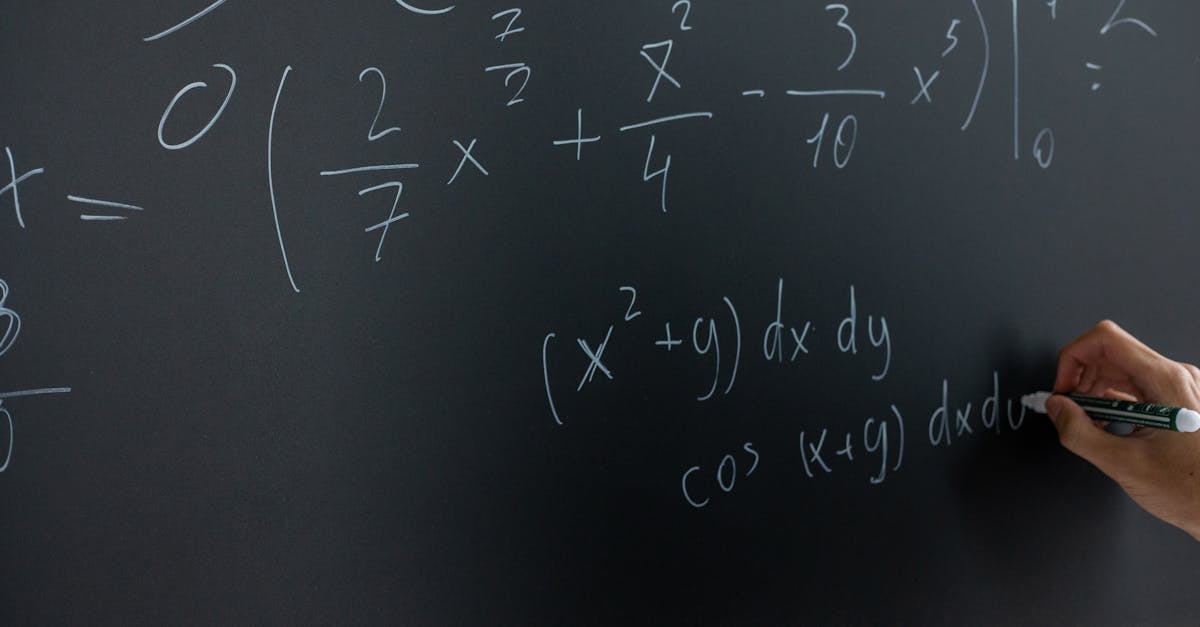
Think of math as a language with its own alphabet. Over several millennia—from tally marks pressed into clay to the equations humming inside a graphing calculator—mathematicians have built a compact shorthand for ideas that would otherwise take pages to describe. A single line like E = mc² captures a relationship that once required long essays to explain. Whether you are checking a lab report, reading a loan statement, writing code, or helping a kid with homework, recognising these symbols saves time and prevents mistakes. The guide below walks through the notation you are most likely to meet, starting with schoolyard arithmetic and ending with the notation used in research-level calculus.
How Math Notation Came to Be
For most of recorded history, mathematics was written in full sentences. Scholars in Mesopotamia and the Nile Valley—roughly 2000 BCE—had dedicated glyphs for numerals, yet operations like "add" or "take away" were spelled out in prose. Historians call this word-based style "rhetorical algebra," and reading it today feels closer to a legal contract than an equation.
Most of the symbols that now feel inevitable are only a few centuries old. The Welsh physician Robert Recorde sketched two parallel lines in 1557 and called them the equals sign because "noe 2 thynges can be moare equalle." Plus and minus slipped into German trade manuscripts in the late 1400s. William Oughtred proposed the × cross for multiplication in 1631, Johann Rahn inked ÷ for division in 1659, and René Descartes locked in x, y, and z as the standard letters for unknowns in 1637.
Once printed math shed its verbal clothing, the subject could travel. A proof drafted in Kyoto reads the same to a student in Buenos Aires or a researcher in Nairobi. In that sense the symbolic notation on a whiteboard is probably the most widely shared written system our species has ever produced.
Everyday Arithmetic Symbols
| Symbol | Name | Meaning | Example |
|---|---|---|---|
| + | Plus / Addition | Combines two amounts | 9 + 6 = 15 |
| − | Minus / Subtraction | Takes one amount away from another | 20 − 8 = 12 |
| × or · | Times / Multiplication | Repeats one quantity another number of times | 6 × 7 = 42 |
| ÷ or / | Divided by / Division | Splits a quantity into equal parts | 45 ÷ 9 = 5 |
| = | Equals | States that both sides have the same value | 10 − 4 = 6 |
| % | Percent | Parts out of one hundred | 25% = 0.25 |
| √ | Square root | The number whose square is underneath | √81 = 9 |
| ^ or superscript | Exponent / Power | Multiplies the base by itself | 3⁴ = 81 |
| ! | Factorial | Multiplies every whole number down to 1 | 6! = 720 |
| |x| | Absolute value | How far the number sits from zero | |−12| = 12 |
Symbols for Comparing Quantities
| Symbol | Name | Read As |
|---|---|---|
| = | Equals | "is equal to" |
| ≠ | Not equal to | "is not equal to" |
| < | Less than | "is less than" |
| > | Greater than | "is greater than" |
| ≤ | Less than or equal to | "is less than or equal to" |
| ≥ | Greater than or equal to | "is greater than or equal to" |
| ≈ | Approximately equal to | "is approximately equal to" |
| ≡ | Identical to / Congruent | "is identical to" or "is congruent to" |
| ∝ | Proportional to | "is proportional to" |
The Language of Algebra
Terms Worth Knowing
Constant — a value that never changes during the problem: π, e, 12
Coefficient — the number sitting in front of a variable: in 7y, the coefficient is 7
Expression — any mix of numbers, variables, and operations without an equals sign: 4x − 9
Equation — two expressions joined by an equals sign: 4x − 9 = 3
Inequality — two expressions linked by <, >, ≤, or ≥: 4x − 9 ≤ 3
Polynomial — a sum of terms with whole-number powers: 2x⁴ − x² + 6
Function — a rule pairing each input with a single output: g(t) = t + 4
Domain — every input value the function will accept
Range — every output value the function can produce
Symbols You'll See Often
| Symbol | Name | Meaning |
|---|---|---|
| ∑ | Sigma (summation) | Shorthand for adding up many terms |
| ∏ | Pi (product) | Shorthand for multiplying many terms |
| ∞ | Infinity | A quantity that grows without bound |
| f(x) | Function notation | The output of function f when the input is x |
| log | Logarithm | Undoes an exponent |
| ln | Natural logarithm | A logarithm with base e |
Geometry: Words and Signs
Line — a straight path that keeps going in both directions forever
Ray — starts at one point and shoots off in a single direction
Angle — the opening between two rays that meet at a vertex; measured in degrees (°) or radians
Parallel (∥) — two lines that will never meet, no matter how far you extend them
Perpendicular (⊥) — two lines that cross at a right angle
Congruent (≅) — identical shape and identical size
Similar (~) — identical shape, possibly scaled up or down
π (pi) — the distance around any circle divided by its diameter ≈ 3.14159
Words Behind the Formulas
Perimeter (L. per + metrum = around + measure) — the distance you'd walk tracing the outline of a flat shape. Area (L. area = level ground) — how much surface a two-dimensional figure covers. Volume (L. volumen = roll/scroll) — how much space a three-dimensional object takes up. Circumference (L. circum + ferre = around + carry) — the specific name given to a circle's perimeter.
Notation Used in Set Theory
| Symbol | Name | Meaning |
|---|---|---|
| { } | Set brackets | Wrap around the members of a set: {red, blue, green} |
| ∈ | Element of | a ∈ S means "a belongs to set S" |
| ∉ | Not element of | a ∉ S means "a does not belong to set S" |
| ∪ | Union | Everything that appears in either set |
| ∩ | Intersection | Only what appears in both sets |
| ⊂ | Subset | Every member of A is also a member of B |
| ∅ | Empty set | The set that contains nothing at all |
Core Calculus Vocabulary
Derivative (f'(x) or dy/dx) — how fast a function is changing; the slope of its curve at a chosen point
Integral (∫) — the running total of a quantity; geometrically, the area beneath a graph
Differential (dx, dy) — a vanishingly small step in a variable
Continuous — a function you could draw without lifting the pen
Convergent — a sequence or series that settles on a single finite value
Divergent — a sequence or series that refuses to settle down
Symbols from Statistics and Probability
| Symbol/Term | Meaning |
|---|---|
| x̄ (x-bar) | The mean of a sample drawn from the population |
| μ (mu) | The mean of the full population |
| σ (sigma) | Population standard deviation |
| s | Sample standard deviation |
| n | How many items are in the sample |
| P(A) | The chance that event A happens |
| Median | The value sitting exactly in the middle of sorted data |
| Mode | The value that shows up most often |
| Variance | The average squared gap between each value and the mean |
| Correlation | A number summarising how two variables move together |
Greek Letters That Do Heavy Lifting
Mathematicians borrow from the Greek alphabet whenever Roman letters run out. Each letter carries a loose set of conventional jobs:
| Letter | Name | Common Use |
|---|---|---|
| α (alpha) | alpha | Angles; the cut-off for a hypothesis test |
| β (beta) | beta | Angles; the beta probability distribution |
| γ (gamma) | gamma | The Euler–Mascheroni constant; certain angles |
| δ, Δ (delta) | delta | A change in something (Δt = change in time) |
| ε (epsilon) | epsilon | A tiny positive quantity, often in proofs |
| θ (theta) | theta | Angles, especially inside trigonometry |
| λ (lambda) | lambda | Wavelengths; eigenvalues in linear algebra |
| μ (mu) | mu | The prefix for "micro-"; population means |
| π (pi) | pi | Circumference-to-diameter ratio ≈ 3.14159 |
| σ, Σ (sigma) | sigma | Standard deviation (σ); summation (Σ) |
| φ (phi) | phi | The golden ratio ≈ 1.618; certain angles |
| ω (omega) | omega | Angular speed; the very last item in a list |
The Main Families of Numbers
Whole numbers: 0, 1, 2, 3, 4, … — the naturals plus zero
Integers (ℤ): …, −3, −2, −1, 0, 1, 2, 3, … (from German "Zahlen" = numbers)
Rational numbers (ℚ): anything that can be written as p/q with whole numbers (from Latin "quotient")
Irrational numbers: values that refuse to fit any fraction (π, √2, e)
Real numbers (ℝ): rationals and irrationals taken together
Complex numbers (ℂ): written a + bi, mixing a real part with an imaginary one
Prime numbers: whole numbers with no divisors other than 1 and themselves (2, 3, 5, 7, 11, …)
Composite numbers: whole numbers greater than 1 that do have extra divisors (4, 6, 8, 9, 10, …)
Saying Math Out Loud
Speaking math clearly matters whenever you teach, tutor, or talk through a problem with a colleague. These are the usual verbal readings:
f(x) = 2x + 1 → "f of x equals two x plus one"
∫₀¹ x² dx → "the integral from zero to one of x squared dx"
lim(x→∞) 1/x = 0 → "the limit as x approaches infinity of one over x equals zero"
∑ᵢ₌₁ⁿ i → "the sum from i equals one to n of i"
dy/dx → "dy dx" or "the derivative of y with respect to x"
A ∪ B → "A union B"
A ∩ B → "A intersect B" or "A intersection B"
Getting comfortable with this notation pays off well beyond math class. The same symbols turn up in spreadsheets, in engineering drawings, inside statistical software, and in the fine print of a mortgage contract. Each sign is a condensed piece of reasoning that someone, somewhere, worked hard to standardise—and once you can read them fluently, huge stretches of science, finance, and technology become readable too. Keep this page bookmarked the next time an unfamiliar glyph pops up in a textbook or paper.