 Dictionary Wiki
Scientific Nomenclature: How Scientists Name Things
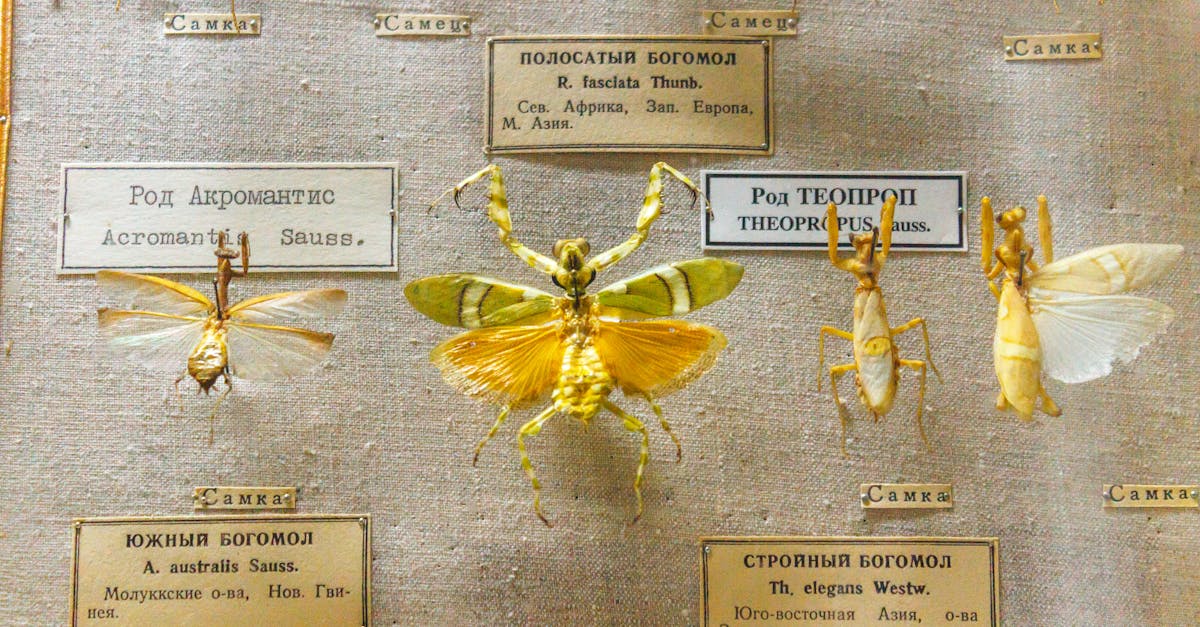
Science depends on names that do more than sound impressive. A name may tell you that a plant belongs to an oak genus, that a compound contains sodium and chlorine, or that a star has a particular place in a constellation catalog. Scientific nomenclature gives researchers a shared label for the same thing, whether they are working in Tokyo, Nairobi, São Paulo, or Toronto. From Homo sapiens and H₂O to Sirius and streptococcus, these naming systems keep technical communication clear, consistent, and searchable.
The Reason Scientists Standardize Names
Everyday names can be confusing because they shift from place to place. A British "robin" is Erithacus rubecula, but an American "robin" is Turdus migratorius—a different bird altogether. In the United States, "corn" usually means maize; in much of the rest of the world, maize is the preferred term, and older British English used "corn" for cereal grain in general. If researchers relied only on local names, they would constantly have to stop and ask, "Which one do you mean?"
Scientific nomenclature removes that uncertainty by giving each recognized entity a formal name that can be used internationally. The rules are designed to promote stability, so names are not changed casually; universality, so the same name can be understood across languages; and uniqueness, so a valid name points to one specific organism, substance, object, or structure.
No single naming method covers all of science. Biology relies heavily on Latinized binomials. Chemistry builds names from molecular structure. Astronomy combines traditional names, catalog systems, and formal approvals. The details differ, but the purpose is the same: a scientific name should identify the subject accurately and leave as little room for confusion as possible.
How Living Things Are Named
Linnaeus and the Two-Word Species Name
Carl Linnaeus, an 18th-century Swedish naturalist, gave biology one of its most durable tools: binomial nomenclature. In this system, a species name has two main parts. The genus comes first and is capitalized; the specific epithet follows in lowercase. Both are usually written in italics.
Felis catus — domestic cat
Homo sapiens — humans (Homo = human, sapiens = wise)
Quercus robur — English oak
Escherichia coli — the E. coli bacterium
Rosa canina — dog rose
Tyrannosaurus rex — T. rex, the "tyrant lizard king"
Canis lupus familiaris — domestic dog
Taxonomic Ranks from Broad to Specific
Biologists also arrange species in a hierarchy, with each level nested inside a broader one. Humans can be classified like this:
| Rank | Name | Characteristics |
|---|---|---|
| Domain | Eukarya | Organisms with nucleated cells |
| Kingdom | Animalia | Multicellular animals |
| Phylum | Chordata | Animals with a notochord |
| Class | Mammalia | Warm-blooded, milk-producing |
| Order | Primates | Forward-facing eyes, grasping hands |
| Family | Hominidae | Great apes |
| Genus | Homo | Human-like primates |
| Species | H. sapiens | Modern humans |
The Rulebooks Behind Species Names
Biological names are controlled by international codes. Animals follow the International Code of Zoological Nomenclature (ICZN). Algae, fungi, and plants follow the International Code of Nomenclature for algae, fungi, and plants (ICN). Bacteria and viruses have their own separate codes. Among the central principles are these: names must be Latin or Latinized, the earliest validly published name usually has priority, and species names use the binomial form.
How Chemicals Are Named
The IUPAC Approach to Compound Names
The International Union of Pure and Applied Chemistry (IUPAC) sets the main standards for chemical nomenclature. Chemical names work differently from biological names. Instead of functioning mainly as Latinized labels, many chemical names are meant to describe the compound’s structure or composition.
CO₂ = carbon dioxide
NaCl = sodium chloride, the compound in table salt
H₂SO₄ = sulfuric acid
H₂O = dihydrogen monoxide, better known as water
Organic compounds:
C₂H₆ = ethane, with 2 carbons
CH₄ = methane, with 1 carbon
C₆H₁₂O₆ = glucose
C₃H₈ = propane, with 3 carbons
Where Element Names Come From
Discoverers may propose names for chemical elements, but IUPAC must approve them. The sources are varied: Latin, as in aurum for gold and the symbol Au; Greek, as in helios for helium; places, as in francium from France and americium from America; scientists, as in curium for Marie Curie and einsteinium for Einstein; and properties, as in chlorine from Greek chloros, meaning green.
How Celestial Objects Are Named
The International Astronomical Union (IAU) is the recognized authority for naming objects in space. Because stars, planets, moons, asteroids, and comets are cataloged in different ways, they do not all follow one naming pattern.
Names and Designations for Stars
Many bright stars have long-established proper names. A large number are Arabic in origin, including Aldebaran, Betelgeuse, and Rigel; others are Greek or Latin, such as Polaris, Sirius, and Vega. The Bayer system identifies a star with a Greek letter plus the genitive form of its constellation name, as in Alpha Centauri and Beta Orionis.
How Planets and Moons Get Their Names
Most planets in our solar system are named for Roman gods: Mercury, Venus, Mars, Jupiter, and Saturn, for example. Earth has a Germanic name, while Uranus is Greek. Moons often follow a theme. Jupiter’s large moons have names from Greek mythology, including Io, Europa, Ganymede, and Callisto. Uranus’s moons include names from Shakespearean characters, such as Oberon, Titania, and Ariel.
Naming Asteroids and Comets
Once an asteroid’s orbit is confirmed, it can receive both a number and a name, such as 1 Ceres or 433 Eros. Comets are commonly named for the people who discovered them; Halley’s Comet and Hale-Bopp are familiar examples.
Names for Rocks, Minerals, and Deep Time
Geological time periods often take their names from locations or defining features. Jurassic comes from the Jura Mountains, Devonian from Devon, and Cambrian from Cambria, the Latin name for Wales. Carboniferous means coal-bearing, while Cretaceous comes from Latin creta, meaning chalk.
Mineral names are overseen by the International Mineralogical Association. A mineral may be named for a person who discovered or studied it, the place where it was found, its chemical makeup, or a visible property. Examples include feldspar, from German "field-spar"; quartz, from German and possibly from a Slavic word meaning "hard"; and calcite, from Latin calx, meaning lime.
How Medicine and Anatomy Name Things
Medical terminology draws heavily on Greek and Latin, but the reasons behind individual names vary. A disease may be named after a discoverer, as in Parkinson’s disease or Alzheimer’s disease; after symptoms, as in diabetes mellitus, meaning "sweet siphon"; after the affected organ, as in hepatitis, or liver inflammation; or after the cause, as in streptococcal infection.
Anatomical terms follow Terminologia Anatomica, the international standard for body-structure names. Muscles, bones, nerves, blood vessels, and other structures each have standardized Latin names, which helps doctors, researchers, and students refer to the same anatomy across countries and languages.
Scientific Word Roots You’ll See Often
| Root | Origin | Meaning | Examples |
|---|---|---|---|
| -ology | Greek logos | study of | biology, geology, zoology |
| -cyte | Greek kytos | cell | leukocyte, erythrocyte |
| aqua- | Latin | water | aquatic, aquifer, aquarium |
| -morph | Greek morphe | form, shape | morphology, polymorphic |
| terra-/geo- | Latin/Greek | earth | terrestrial, geography |
| -phyll | Greek phyllon | leaf | chlorophyll, phyllotaxis |
| stella-/astro- | Latin/Greek | star | constellation, astronomy |
| -saurus | Greek sauros | lizard | dinosaur, Tyrannosaurus |
| -gen | Greek genos | birth, origin | oxygen, hydrogen, pathogen |
How to Pronounce Scientific Names
Most English speakers use an anglicized version of Latin pronunciation for scientific names. For many terms, there is no single pronunciation accepted by everyone; working scientists often say the same name in different ways. A few practical habits help: sound out each vowel, put stress on the next-to-last syllable when it is long, and use English-friendly versions of Latin sounds.
Tyrannosaurus — tih-RAN-oh-SORE-us
Chrysanthemum — krih-SAN-theh-mum
Escherichia — esh-er-IK-ee-uh
When Scientists Get Playful with Names
Formal naming does not prevent scientists from showing a sense of humor. Some famous examples include Spongiforma squarepantsii, a fungus named after SpongeBob; Ninjemys, a turtle name inspired by the Teenage Mutant Ninja Turtles; Ba humbugi, a snail with a Scrooge joke built in; Pieza pi, a fly; and Agra vation, a beetle. Even the jokes must fit the official rules of the relevant naming code.
Scientific nomenclature is practical, but it is also deeply human. It preserves discoveries, honors people and places, records features, and gives researchers a common language for exact reference. Once you know how the systems work, names that once looked intimidating start to act like clues.