 Dictionary Wiki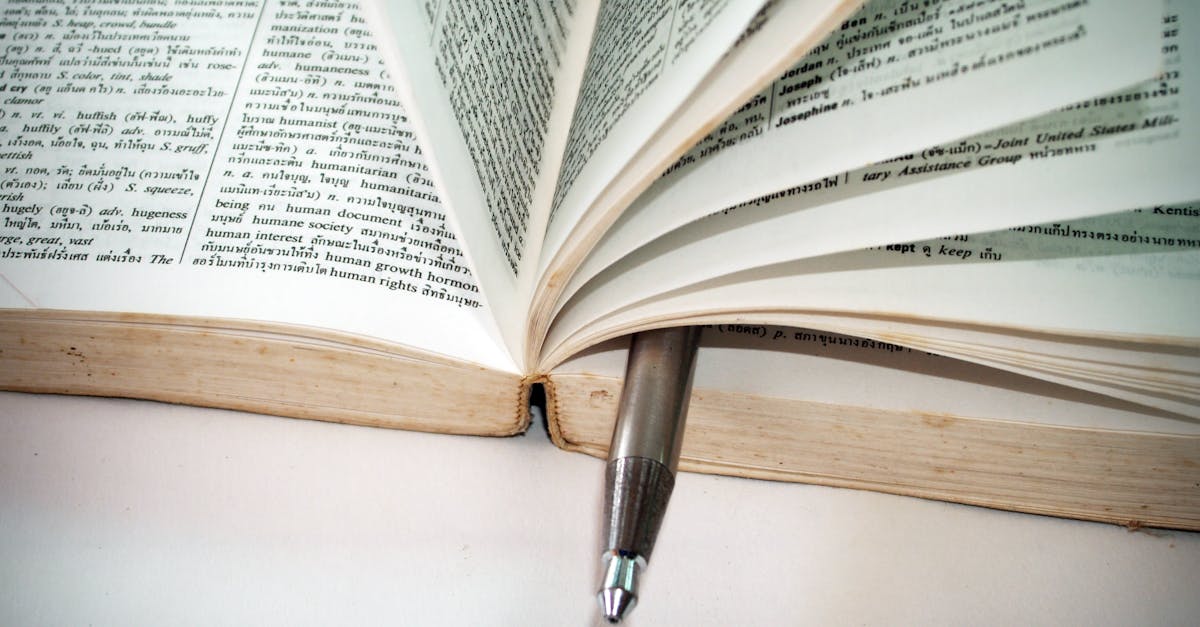
Contents at a Glance
- Getting Started with Scrabble Words
- The Word Lists That Decide Valid Plays
- Points, Tiles, and Letter Counts
- Two-Letter Words Every Player Needs
- Words That Make High-Value Tiles Pay Off
- Playable Q Words That Do Not Need U
- Bingos: Using All Seven Tiles
- Smarter Ways to Use Word Knowledge
- How to Grow Your Scrabble Vocabulary
- What Scrabble Teaches About Words
Getting Started with Scrabble Words
A strong Scrabble player does not just know more words; they know the right kinds of words. Short oddities, flexible hooks, seven-letter plays, and words containing J, X, Q, or Z can turn an ordinary rack into a scoring chance. Board vision and rack balance matter too, but vocabulary gives you choices. Without enough valid plays in mind, even a good position can go to waste.
Scrabble word study has its own flavor. The playable list contains plenty of entries that rarely appear in conversation: old terms still recorded in dictionaries, borrowed words, technical vocabulary, variant spellings, and tiny two-letter forms that look almost impossible at first. Tournament players often learn these words for validity before they worry about full definitions. Much like a chess player memorizes openings, a Scrabble player memorizes playable patterns. This guide gives you the core word groups and practical habits that can raise your scores quickly.
The Word Lists That Decide Valid Plays
Before studying, make sure you know which dictionary your game follows. Scrabble uses two major official word sources, depending on where and how the game is played:
TWL: The North American Tournament List
TWL is used for official Scrabble tournaments in the United States, Canada, Israel, and Thailand. It is tied to the Merriam-Webster Official Scrabble Players Dictionary, often called OSPD, and includes about 187,000 playable words. The consumer OSPD omits some potentially offensive entries, while the tournament list, known as TWL or OWL, retains them. Updates appear from time to time, adding current entries and removing words no longer accepted.
SOWPODS, or Collins Scrabble Words, for International Play
Outside those North American rulesets, official tournaments generally use SOWPODS, now commonly associated with Collins Scrabble Words. This list merges TWL with words from Collins English Dictionary, formerly Chambers Dictionary. It contains roughly 280,000 accepted words, far more than TWL. Some words appear in SOWPODS but not TWL, and the reverse can also happen, so players moving between rule systems need to check their assumptions.
At home, the best dictionary is the one everyone agrees to use. Many casual games settle challenges with an online dictionary. The important step is deciding the authority before the first tile is played.
Points, Tiles, and Letter Counts
Good scoring starts with knowing what each tile is worth and how often it appears. A standard English Scrabble set has 100 tiles distributed like this:
| Points | Letters |
|---|---|
| 0 | Blank (×2) |
| 1 | A(×9), E(×12), I(×9), O(×8), U(×4), L(×4), N(×6), S(×4), T(×6), R(×6) |
| 2 | D(×4), G(×3) |
| 3 | B(×2), C(×2), M(×2), P(×2) |
| 4 | F(×2), H(×2), V(×2), W(×2), Y(×2) |
| 5 | K(×1) |
| 8 | J(×1), X(×1) |
| 10 | Q(×1), Z(×1) |
The big tiles—J, X, Q, and Z—deserve special attention because a premium square can multiply them into huge turns. Still, low-value tiles win games too. If you can use common letters cleanly, especially the many E tiles, you are less likely to be trapped with an awkward rack.
Two-Letter Words Every Player Needs
Two-letter words are small, but they do heavy work. They let you place tiles alongside words already on the board, often making several new words at once. In TWL, there are about 107 valid two-letter words. Start with these groups:
- High-value: JO (a Scottish sweetheart), QI (Chinese life force), XI (Greek letter), XU (Vietnamese currency), ZA (pizza, informal)
- Unusual but valid: KA (Egyptian spirit), KI (variant of chi/qi), MU, NU, OE (Faroe Islands wind), SH, TA, UT (musical note)
- Common: AA, AB, AD, AE, AG, AH, AI, AL, AM, AN, AR, AS, AT, AW, AX, AY
- Easy to miss: BI, BO, DE, ED, EF, EL, EM, EN, ER, ES, ET, EX, FA, FE, GI, GO, HA, HE, HI, HM, HO
If you learn only one category first, make it the two-letter list. These words create lanes, extend turns, and make parallel plays possible in places that otherwise look closed.
Words That Make High-Value Tiles Pay Off
Some words earn their keep because they give expensive tiles a practical place to land:
Useful J Plays
- JO (2 letters, 9 points) — Scottish word for sweetheart
- JAB, JAG, JAM, JAR, JAW, JAY — handy three-letter options with J
- JEEZ, JIVE, JINX, JIVY, JOKY, JURY — practical four- and five-letter plays
Helpful X Plays
- XI, XU — the key two-letter X words
- AX, EX, OX — short words that finish with X
- OXID, OXIM, OXES — less familiar X words worth knowing
- APEX, AXLE, EXAM, EXPO, FLUX, JINX, LUXE, ONYX — flexible X words for many board positions
Strong Z Plays
- ZA — the playable two-letter Z word, meaning pizza in slang
- ZAG, ZAP, ZED, ZEE, ZEN, ZEP, ZIG, ZIN, ZIP, ZIT — short ways to unload Z
- ADZE, AZAN, FIZZ, FUZZ, JAZZ, ZING, ZONE, ZOOM — longer Z words with strong scoring potential
Playable Q Words That Do Not Need U
The Q is powerful but dangerous. If you draw it without a U, it can sit on your rack for turn after turn. These accepted Q-without-U words keep that from happening:
- QI — the vital life force in Chinese philosophy, and the most valuable Q-without-U word to know
- QAT — a plant chewed as a stimulant
- QADI — an Islamic judge
- QOPH — a Hebrew letter
- QANAT — an irrigation tunnel
- QINDAR — variant of qintar
- QINTAR — Albanian monetary unit
- TRANQ — short for tranquilizer
- QWERTY — keyboard layout, valid in SOWPODS but not TWL
Once you know this group, the Q becomes far less frightening. QI on a Triple Letter Score can produce 62 points with only two tiles. Learning the origins of these words can also make the spellings easier to remember.
Bingos: Using All Seven Tiles
A "bingo" happens when you play all seven tiles from your rack in one move, earning a 50-point bonus. These turns often score 70 to 100 points or more and can swing an entire game. That is why competitive players spend so much time studying seven-letter words, along with eight-letter words that use seven rack tiles plus one tile already on the board.
Common bingo patterns include:
- STEARIN, NASTIER, ANTSIER — made from AEINRST, an excellent bingo rack
- ENTRIES, ENTIRES, TRIENES — built from EEINRST
- SATIRE, RETAIN, RETINA — anagrams from the frequent AEINRT pattern
- STONIER, ORIENTS, NORITES — from EINORST
- ELATION, TOENAIL — from AEILNOT
Strong players learn to notice racks that are close to bingo shape. The friendliest bingo tiles are usually the common one-point letters: A, E, I, N, R, S, and T.
Smarter Ways to Use Word Knowledge
Memorizing lists helps, but winning play also depends on how you use those words. Keep these principles in mind:
- Keep your rack balanced. Try to maintain a workable mix of vowels and consonants. If you have too many of either, use a turn to clear them instead of waiting for an ideal play that may not arrive.
- Learn hooks. A hook is one letter added to the beginning or end of a word to make a new word. For instance, AREA can become AREAS with a back hook, while LATE can become PLATE with a front hook. S, D, R, and E are especially common back hooks.
- Control the board. The best move is not always the biggest score on your turn. Sometimes you should block an easy triple-word lane or avoid giving your opponent a premium-square setup.
- Practice anagram patterns. Tournament players often study alphagrams, which are alphabetized sets of letters matched with their playable words. This trains you to see words hidden in mixed tiles.
- Use common endings. Endings such as -ING, -TION, and -ED can turn smaller bases into longer plays and help you move toward bingo opportunities.
How to Grow Your Scrabble Vocabulary
Players who study seriously usually build their word knowledge in several ways:
- Post-game review: After a game, check unfamiliar words your opponent used. Then look at your own racks and find plays you missed.
- Probability-based word lists: Start with words built from common letter combinations, since those are the ones you are most likely to draw.
- Dictionary browsing: Regular time with a dictionary exposes you to legal words you may never meet in ordinary reading, which is exactly the kind of breadth Scrabble rewards.
- Flashcard apps: Zyzzyva and other Scrabble-focused tools can quiz you on random letter sets and ask you to find the valid plays.
What Scrabble Teaches About Words
Competitive Scrabble often treats words as playable letter patterns, but the game can still build real vocabulary. Many players find that it broadens their sense of English, from rare but valid terms to ordinary words they had simply never used before.
The link between word games and vocabulary growth is strong. Scrabble especially rewards familiarity with English word formation: prefixes, suffixes, roots, variants, and the ways letters combine. That pattern awareness can carry over into reading, writing, and everyday communication. You may sit down to score points, but you often leave knowing more words than when you started.
Look Up Any Word Instantly on Dictionary Wiki
Get definitions, pronunciation, etymology, synonyms & examples for 1,200,000+ words.
Search the Dictionary